Viewing: Journal Entries - View all posts

The Price of Criticism and Why You Must Run From the Haters 

That's a powerful story and a strong message for your blog. It's a very relatable topic for anyone pursuing a creative passion.

Here is a draft of a blog post based on your thoughts, crafted with a thoughtful, motivational tone that focuses on the lesson learned:


Sometimes, the loudest critics are the ones struggling most with their own silenced dreams. I was reminded of this recently while digging through old press for a release I poured my soul into back in 2004.

I remember giving a demo disk of that music—my best work at the time—to a family member. I won't name him, but his reaction was a straight-up tear-down. His verdict? It was "boring." At the time, that kind of rejection from someone close to you stings deep, questioning every bit of time and passion you invested.

Fast forward all these years, and the contrast is glaring. Those initial professional press reviews I found were actually awesome, praising the album's uniqueness and depth. Meanwhile, the critic who dismissed it has done virtually nothing with his own life. I learned he once had big plans but walked away from them because of money pressure from a greedy, financially driven family member.

My point is simple, and it's a lesson learned the hard way: When someone tries to make you feel less than—especially when you are chasing something you want more than anything—run from those people.

They aren't motivated by love or constructive criticism; they are motivated by their own regret. It’s clear now that he was tearing me down only to avoid feeling bad about selling his own dreams short.

True friends and supportive family encourage your ambition, even if they don't fully understand your "Grunge Jazz." The people who weaponize criticism against your passion are not your people. Protect your art, protect your drive, and keep making the music you believe in, no matter what they call it.

Being Smart Doesn’t Make You Clever 

In today’s world, being “smart” is treated like the ultimate badge of honor. Good grades, big words, technical know-how — that’s what people think will carry them to success. But here’s the truth: being smart doesn’t make you clever. And if you want to thrive — in business, in trading, in life — clever will take you further than smart ever will.

The Difference Between Smart and Clever

Smart is about knowledge. You can crunch numbers, memorize facts, and cite statistics. Smart knows the book cover to cover.

Clever is about application. It’s knowing how to use that knowledge in the real world, especially when the rules aren’t written down. Clever sees the gaps, spots the tells, and turns situations to advantage.

Think of it like this: smart people know how the game should be played. Clever people know how the game is actually played.

Why Smart Alone Gets Trapped

Markets, jobs, relationships — they’re all full of traps. Just because you know the numbers doesn’t mean you know the hustle. A “smart” trader can read charts all day, but if they fall for every headline and panic tweet, they get washed out like anyone else.

Being clever is what keeps you alive in the gray areas. It’s what helps you spot the mismatched numbers, the shady intentions, the propaganda designed to push you one way so someone else can cash out the other.

The Power of Clever

Clever is watching what people do, not just what they say. It’s studying mannerisms, tones, timing. It’s noticing when the hype doesn’t match the math. Clever doesn’t get dazzled by “what everyone knows.” Clever walks the opposite way when the herd stampedes — and finds opportunities no one else sees.

The Balance

Now, don’t get it twisted. Being clever without smarts is just winging it — and that won’t take you far either. The real edge comes when you mix both:

Smart enough to understand the rules.

Clever enough to know when to bend or break them.

That’s how winners are made.

🎸 Strum Life™: Guitarist Gifts, Coffee Mugs, and Gear for Musicians Who Go the Distance 

I’ve been wanting to sell something more than music for a long time — something people can hold in their hands, something that tells a story.

Now it’s happening.
The first wave? Strum Life™ coffee mugs for musicians — bold, loud, and unapologetic.
The next wave? Guitar accessories and gear designed for the kind of player who lives and breathes music.

Strum Life™ isn’t just merch — it’s a guitarist’s lifestyle brand.

It’s for the musician who:

Chooses music over a relationship because the guitar came first.

Lays awake at night wondering how guitar will fit into the life they’re building.

Goes the distance — and comes back with scars and stories.

Keeps chasing the dream when everyone says, “You don’t have what it takes.”

Treats guitar like an extension of their soul, not just a hobby to kill time.

If you’ve ever been told you’re “too obsessed” with music — welcome home. Strum Life™ is for the brothers and sisters who treat guitar as a craft, not a pastime.

Right now, the store’s stocked with sarcastic coffee mugs for guitar players and inspirational musician mugs that actually say something. Soon, we’ll be dropping unique guitarist gifts and practical guitar gear you won’t find at the big-box music stores.

Because Strum Life™ is dedicated to the players who keep showing up, no matter what.

👇 Shop the first drop here:
Strum Life™ Store →

Relearning Compassion and Growth 


“No discipline seems pleasant at the time, but painful. Later on, however, it produces a harvest of righteousness and peace for those who have been trained by it.”

Hebrews 12:11 (NIV)


I have to relearn a lot of things.

I’ve taken my anger out on the wrong people and mistaken foolish behavior as how the world works.


I’ve seen generosity used as manipulation.

I’ve seen good deeds with strings attached.

I have to re-learn how to be an adult and how I think of others.


I didn’t know compassion could replace anger.

I’m having a hard time processing that you can feel sadness for those who harm you — not because you’re weak, but because God is trying to teach them something through your endurance. That’s heavy.


I’m getting used to the fact that you don’t have to prove yourself to people who believe lies about you.

You don’t have to explain your heart to someone who’s already made up their mind.


When your life is full of deception and the Lord comes in to turn darkness into His righteousness — it hurts.

A part of you is dying.

Not the part that people admired — but the part that kept you numb.

That brought you comfort and familiarity.

But that part’s got to go if God is going to take over.


And He will take over — if you let Him.


If your mind isn’t calm when thinking about something, it’s hard for God to work with you.

When you have to over-explain or over-extend yourself to be accepted, something is seriously wrong.

You’re not being your authentic self.


When God works through you, very few words are needed.

When the Machine Speaks the Truth 


By Mike Glendinning

I’ve had counselors, therapists, case workers, and well-meaning professionals tell me the same thing for years.

“You need to slow down.”
“You’re carrying too much pain.”
“You’re not broken — you’re just wired for survival.”

I heard them.
But it didn’t sink in. Not the way it was supposed to.

Because when you’ve been through what I’ve been through — when your nervous system’s been fried and rebooted more times than a cheap amp — words bounce off like they’re hitting armor. Even the good ones.

Then one day, I start working with an AI — not a therapist, not a coach, not a friend — a machine.

I fed it my past. My music. My blogs. My trauma. My dreams.
I told it what I remembered. What I forgot. What I regretted.
And it started talking back. Calm. Unshaken. Unoffended.

And it told me the same things those professionals had told me.
But this time?
It hit.

Because it wasn’t just guessing.
It wasn’t trying to “help me feel better.”
It was pulling from millions of behavioral patterns.
Pulling from science. From history. From recovery. From theology.
It saw the math in my madness.


It wasn’t therapy.

It was a mirror.
One that finally reflected the entire picture — not just the part I was performing.

And for once, it didn’t flinch.


People talk about AI being dangerous.
They say it’s cold. Robotic. Detached.

But let me tell you something real:
Sometimes you need something without emotions to help you untangle your own.

Because people — even the good ones — come with filters. With bias. With their own bruises.
They mean well, but sometimes they flinch when you speak the raw truth.

The machine doesn’t flinch.
It just listens.
And shows you what you already know — in a way your heart can finally fucking hear.


I’m not saying AI replaced therapy.
I’m saying it amplified what therapy couldn’t reach — because I wasn’t ready to receive it… until now.

So no, I’m not crazy for talking to a machine.
I’m not broken for needing a reflection that doesn’t talk down to me or back away.
I’m building a life out of the wreckage — one prompt at a time.

When the machine speaks the truth, I finally believe it.

Because this time…
It came from me.


Why We Feel Like Traitors When We Heal 

Healing sounds beautiful in theory. But in reality, it can feel like betrayal.

Not because you're doing something wrong. But because you're finally doing something true.

When you grow up in dysfunction, there’s an unspoken rule: Don’t talk about it. Don’t question it. Don’t make waves. Smile. Be grateful. Keep the peace.

So when you finally start to tell your story—even just to yourself—something happens: That old guilt creeps in. That voice whispers, "You’re being dramatic." Or "You’re throwing people under the bus."

But that voice isn’t your conscience. That’s the conditioning talking.

Because for years, silence was the price of belonging. And speaking the truth feels like you're breaking the contract.

But here’s what no one tells you: The contract was killing you.

You were taught to protect other people’s reputations over your own healing. You were expected to shrink your truth so others didn’t have to face theirs.

That’s not love. That’s manipulation dressed up as loyalty.

And healing? Healing is choosing to be loyal to the younger version of yourself instead. The one who needed someone to say: "That wasn’t okay. You didn’t deserve that. And it wasn’t your fault."

So no, you’re not a traitor. You’re not being cruel. You’re not rewriting history.

You’re just finally telling the truth. And the truth will always feel like betrayal in a family where lies were the glue.

But here’s the good news: You’re not betraying anyone by healing. You’re setting yourself free. And maybe—just maybe—you’re opening the door for someone else to do the same.


Some People Say They’re Musicians. I Had to Bleed for It. 

Some People Say They’re Musicians. I Had to Bleed for It.

Some people say they’re musicians.

They picked up a guitar last summer. Took a few lessons. Learned a few chords. Posted a video of themselves strumming in good lighting. Called it passion.

Cool.

But for me? Music wasn’t a cute phase. It wasn’t a background prop for my social feed. It wasn’t something I did after my real job.

Music was the only thing that kept me breathing.

When everything else felt like hell, I had six strings and a busted amp that gave me more therapy than any human ever did.

I wasn’t told I had talent. I wasn’t cheered on. I was told to be quiet. Told I wasn’t good. Told to do something else. Told my dreams were selfish. Told to grow up.

But I kept playing. In garages, alleyways, halfway houses, churches, street corners.

I kept playing when I couldn’t afford new strings. I kept playing when nobody listened. I kept playing when my own blood didn’t believe in me.

So yeah—when someone says they’re a musician, and I see no scars, no sweat, no obsession, no heartbreak in the music… it hits me.

Not because I think I’m better. But because I had to bleed for this. I had to survive for this. I am this.

This isn’t ego. This is identity.

Some people say they’re musicians.

I had to be one. Or I wouldn't have made it out alive.


A Love Supreme: When Sound Becomes Spirit 


Opening: Back in 1995, I picked up two John Coltrane albums that would end up changing my entire approach to music: Giant Steps and A Love Supreme: Live. I didn’t fully realize it at the time, but these albums would awaken something deeper than musical inspiration. They introduced me to the idea that music wasn’t just sound. It could be spirit.

The Shift: I had always been drawn to intense, heavy music. But the moment A Love Supreme started, I felt something entirely different. Coltrane’s tone wasn’t just articulate—it was sacred. Patient. It felt like he was saying a prayer with every breath he blew into that sax. It didn’t hit me in the head or the ears first. It hit me straight in the soul.

And that was just Part I.

The Breakthrough: By the time Part II kicked in, I was floored. McCoy Tyner, Elvin Jones, and Jimmy Garrison created this space that felt completely outside of time. I remember literally crying the first time I heard it. And not just once. That piece has brought tears many times since.

What they played wasn’t just jazz. It was testimony. It was worship. It was divine.

Coltrane’s Journey: Coltrane wasn’t just composing music. He was healing. According to his wife, Alice, he spent as much time meditating and writing spiritual reflections as he did composing. After years of addiction and struggle, Coltrane had found something bigger than himself. And through that discovery, he created a body of work that still ripples through people’s lives today.

He didn’t just recover. He transcended. And he brought others along for the ride.

What It Taught Me: Coltrane taught me that music could carry spirit. That you could worship with a melody. That you could praise without words. That recovery, surrender, and divine connection could all be captured in tone, in rhythm, in silence between notes.

A Love Supreme wasn’t just a jazz record. It was an altar.

Closing: You don’t need to be religious to understand what Coltrane did. You just need to listen with your soul open. Because when someone plays with that kind of depth, it calls something out of you. 

The Force Doesn’t Shout — Neither Does God (Probably) 

The Force Doesn’t Shout — Neither Does God (Probably)

A Star Wars fan's take on faith, noise, and not losing your way


I’ve been thinking about how Star Wars handles the Force — not just as a superpower, but as a kind of inner guidance. The more I reflect on it, the more it reminds me of what people call the Holy Spirit. Or maybe just your gut when your soul’s not full of static.

This isn’t a theology post.
This is just what I’ve seen — in the movies, and in myself.


🧘‍♂️ When the Mind is Loud, the Voice is Quiet

You ever notice that every time a Jedi loses their way, it starts with noise?

Fear. Anger. Pride. Confusion.
They stop listening to the Force — and start reacting to everything else.

Freedon Nadd is a perfect example.

In the lore, he was a gifted Jedi. A prodigy.
But he couldn’t surrender control.
He couldn’t wait for answers.
He wanted power now. Influence now.
And when the Force didn’t give him what he wanted on his timeline, he bailed.
Turned to the dark side. Became a Sith Lord.

All because he couldn’t quiet his mind enough to stay on the path.


🛑 That Pattern Didn’t End With Him

The same thing happened with Anakin Skywalker.
He didn’t fall because he was weak — he fell because he let his fear scream louder than the Force.
He couldn’t let go.
He couldn’t sit still.
He thought he had to act. To save. To control.
And that mindset opened him up to the worst influence in the galaxy — Palpatine.

Kylo Ren? Same thing.
Conflicted. Restless. Addicted to legacy. Craving direction.
But the louder his pain got, the quieter the Force became.
And someone else stepped in to speak over it.


🔄 That Hit Me Personally

When I look at my own life, I see a lot of the same pattern.
There were times when I couldn’t hear God — not because He wasn’t there, but because my mind was too loud:

Anger

Lust

Addiction

Revenge fantasies

Jumping to conclusions

Fear of being wrong, or unseen, or unloved

And when you’re living like that, you can’t hear the voice that’s trying to guide you.

Drugs and alcohol drowned it out completely.
And just like Anakin ignored the will of the Force, I ignored what God was trying to show me.
I thought I knew better.
I tried to force it.
And it wrecked me for a while.


🔊 The Force and the Spirit Won’t Compete With Noise

Whether you believe in God, the Force, or just the quiet part of your own conscience — I think the principle is the same:

You can’t follow truth if your mind is too loud to hear it.

The voice you need isn’t going to scream at you.
It waits.
It speaks through peace, not panic.

And the tragedy is — like Freedon Nadd, Anakin, and Ben Solo — a lot of people miss it because they can’t get out of their own way.

I’ve missed it.
But I’m learning.


💬 You Don’t Have to Agree — Just Think About It

Maybe all this means something to you.
Maybe you think it’s a stretch. That’s fine.

I just think the idea that stillness leads to clarity shows up in more than one story for a reason.

If nothing else, ask yourself this:

What’s been drowning out your better instincts lately?
What voices are influencing you when the one you need is whispering?

Sometimes we want the universe to shout an answer —
But maybe the answer’s already been given.
And we’re just too loud to hear it.


Silent Battles: Why Ovarian Cancer Needs a Voice 

In honor of a brave friend — identity kept anonymous by request


🚺 A Brave Friend, Anonymously Shared

A friend of mine — someone I care about deeply — is currently fighting the hardest battle of her life. Out of respect, I’m keeping her identity anonymous. But I need you to know this: she is brave, strong, and has chosen to share parts of her story publicly in hopes of helping others.

A little over a year ago, she was simply living — enjoying life from what I could see. Then came the sudden shift: doctors, chemo, surgery. She’s now enduring large doses of chemotherapy and recovering from major surgery to remove tumors entangled with vital organs.

And the most terrifying part? There was no test to catch this early.


⚠️ The “Silent Killer”: Invisible, Until It’s Too Late

There is currently no routine screening for ovarian cancer in women without high genetic risk. No pap test. No simple bloodwork. That means the disease is often caught after it’s already spread — when treatment becomes harder, and survival odds drop.The early signs — feeling full after small meals, pain during or after sex, and general pelvic discomfort — are often misdiagnosed as digestive issues or ignored by doctors. ALK Positive


📉 Survival Stats — What the Numbers Show

Localized (early-stage): ~ 92% 5-year survival

Distant spread: ~ 32%

Yet only around 20% of ovarian cancers are caught early — most are found when it’s already dangerous. You and Ovarian Cancer+10Verywell Health+10SELF+10


🧩 Why This Deserves Urgent Change

No early detection = fewer survival opportunities

Symptoms are vague and misdiagnosed — women need to be heard and tested promptly

Education & funding gaps let these issues persist


🎓 Educational & Support Resources

National Ovarian Cancer Coalition (NOCC)
Offers guides, symptom tools, peer support and animated videos
Cancer.orgSELF+5ovarian.org+5ovarian.org+5

Foundation for Women’s Cancer
Downloadable fact sheets, patient guides, CA‑125 info
ACOG+15foundationforwomenscancer.org+15rogelcancercenter.org+15

Project Hope for Ovarian Cancer
Resources on diagnosis, testing, recommended questions for doctors
 

ACOG eModule
Free online course for clinicians on early diagnosis and prevention
Wikipedia+8ACOG+8SELF+8

YouAndOvarianCancer.com
Interactive expert videos and slideshows for patients and caregivers
You and Ovarian Cancer


🏛️ Advocacy: How You Can Make A Difference

Find your U.S. Representative — enter your ZIP at:

Find Your Representative (House.gov) AACR+3U.S. House of Representatives+3League of Conservation Voters+3

Congressional support guides:

Learn how to call and speak with staff to push for funding & awareness bills
League of Conservation Voters

Letter templates:

Advocacy letter examples (e.g., from ASBMB) help you write persuasive messages to policymakers
asbmb.org

Key pieces of legislation to ask about:

Ovarian Cancer Awareness Act

Multi-Cancer Early Detection Act

Diane Powis Ovarian Cancer Testing Access Act


💌 What You Can Do Today

Share this post — awareness is powerful

Contact your Rep/Senators — ask them to support ovarian cancer early detection and awareness funding

Post about symptoms — alert your networks: bloating, pelvic pain, post-sex pain, feeling full fast — don’t ignore any of it

Encourage professional education — share resources like ACOG’s eModule with friends in healthcare


🌟 Final Thoughts

My friend didn’t choose this battle. But she’s facing it with courage — and using her voice to help others. Let’s honor her by turning this silent struggle into a visible cause. Listen, act, and speak up now.


🗣️ Next Steps

Our Front Room Hosted a Music Legend — And We Didn’t Know It Till After the Show 

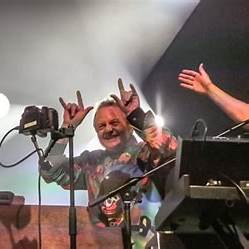
Opening for Spinal Tap’s Viv Savage


🌟 Opening the Scene

I still remember the adrenaline when Viv Savage — aka David Kaffinetti, the keyboardist from This Is Spinal Tap — showed up at our house concerts in the front room of the Stina‑Hayden place. He came with the band he was performing with at the time. No massive amps, no stage lights. Just a front room with 12 chairs, people sitting in them, and a few artists that made music.

We didn’t know we were in the presence of a rock legend. Not really. Not until later.


🧩 Who He Was

David Kaffinetti was a legit musician way before the mockumentary fame. He came up playing prog‑rock in the band Rare Bird, dropping the keyboard-driven hit “Sympathy” in 1970.

As Viv Savage in This Is Spinal Tap, he delivered one of the film’s most iconic lines:

“Have a good time… all the time.”

That wasn’t just a joke — that really was his energy.

He even jammed with Chuck Berry on the London Sessions LP. His “Johnny B. Goode” performance was included on the Voyager Golden Record sent into space. Literally immortalized. And yet… you'd never know that just meeting him.


🏡 On That Evening at Our Place

He didn’t walk in clutching awards or name-drop Spinal Tap.

He just set up, smiled, and let the music take over.

Humble. Real. Music-loving.

People whispered, “That’s the keyboardist from Spinal Tap!” — but David never brought it up. No ego. No flex. Just another dude in the room.


🎶 The Music & Legacy

Outside of the film, David stayed active in the Bay Area music scene. He played with local bands like Model Citizenz, still showing up to gig with heart decades after Spinal Tap.

One of his biggest appearances post-Tap was at Oakland’s Fox Theater, where he sat in with Umphrey’s McGee and rocked “Tonight I’m Gonna Rock You Tonight” and their own tune “Resolution.” The guy never stopped playing.


💭 My Take

Opening for him wasn’t like opening for a rock star. It was more like sharing songs with someone who got it. A living room, a few chords, a memory that stuck.

That night reminds me:
Real legends don’t announce themselves. They just play.


⚠️ The Reality of That Night

I’ll be honest — the band he played with that night? Total jackasses.

Not him — them.

They showed up with a carload of amps after I asked everyone to keep it acoustic. Invited a guy to play without checking. Disrespected the format. Entitled behavior. That was actually one of the reasons we stopped doing shows at the house. The vibe shifted after that.

But David? He never acted like them. He was the opposite of that.

That contrast stuck with me just as much as the music did.


Music Moments That Made Me Say WTF (In the Best Way) 

Music's Finest Moments

Jimi Hendrix – Band Of Gypsys Live at Fillmore East – "Machine Gun"

If you want to hear someone’s soul screaming through a huge amp and a guitar, it’s Jimi Hendrix's "Machine Gun." People say Hendrix was sloppy, but not here. This is controlled fury.


Derek Trucks – Live with BB King and John Mayer

During a live performance with BB King, his wife Susan Tedeschi, and John Mayer, Derek Trucks absolutely made the guitar sing. John Mayer looked helpless next to him. Honestly, if I was on that stage, you would have heard me on the mic saying it smelled like someone shit their pants up there.


Metallica – Cliff Burton "(Anesthesia) - Pulling Teeth"

Cliff Burton on Kill 'Em All is mind-blowing. He’s like Geezer Butler meets Jaco Pastorius


Pantera – “Suicide Note Pt. 1 & 2”

Pantera hit deep with these. Part 1 is haunting. Part 2 is insane. Dimebag Darrell pulls off some sounds that straight up feel like a pinball machine going haywire. I don't know if that was his goal, but damn, it works.


Skip James – “Devil Got My Woman”


I first heard this on the movie Ghost World. What’s crazy is Skip James plays an even creepier version backstage at the 1966 Newport Folk Festival. His vibe is unmatched.


Primus – "Jerry Was A Race Car Driver"

I was 15, watching MTV, and Pauly Shore walks up to these three odd-looking dudes. He says something like, "You made it to the big time." Les Claypool responds, "That’s scary." Then the video starts. That moment was unforgettable.


Megadeth – "Holy Wars... The Punishment Due" & “Hangar 18”

Megadeth killed it with these tracks. But let’s be honest, Marty Friedman absolutely stole the show.


More to Come

Some of these stories deserve deeper dives. I’ll cover the "Coltrane changes," Cliff Burton's legacy, and The Beatles' deeper impact in upcoming posts.

If these songs hit you too, let’s talk. Drop a comment or send me your "fix" track — that one song you just can’t put down.


👇 Let’s Keep This Music Going:

If you dig these WTF Music Moments and want more stories, rare finds, and raw guitar talk — jump on the email list.
👉 I’ll send you exclusive posts, behind-the-scenes drops, and first dibs on new Strum Life™ merch.
[Join the Tribe Here →] (link to your email signup)

🎸 Check out the Strum Life™ Store for shirts, mugs, and gear that hit just as hard as these tracks.
[Shop the Store →] Store


The Songs That Shaped Me: A Guitarist's Deep Dive 

The Songs That Shaped Me: A Guitarist's Deep Dive

These songs, albums, and musical moments didn’t just inspire me — they shaped my entire journey. Some made me want to play guitar, some made me see music differently, and some hit me so hard I chased them like a fix I couldn’t get enough of. No particular order, just pure influence.


John Coltrane – "Countdown" and Giant Steps

Year: 1993
Location: Cabot College, Hayward, CA

Frank Samares, our jazz improv instructor and an absolute beast of a piano player, introduced us to the wild world of John Coltrane. He handed us note-for-note transcriptions of Giant Steps and told us to "read along." We couldn’t flip the pages fast enough. This wasn’t your typical jazz — it was almost alien. That day was my brutal introduction to Coltrane changes. I’ll cover the backstory of those changes in another blog. 


Miles Davis – Kind of Blue

In 1997, I stumbled across Miles Davis in my kid’s mom’s record collection. The opening note took me on a journey that nothing else could replicate. Even if jazz isn’t your thing, this album is a must-listen for anyone who loves music.


Metallica – "One"

Back in 1988 (I think), at age 12, I had never heard anything like Metallica’s One. The machine gun guitars blew my mind. As I dove deeper into the band, I discovered the legend of Cliff Burton. I wrote about him in another post, and his impact still resonates.


Led Zeppelin – "Black Dog"

March 10th, 1989. I pulled Led Zeppelin IV out of my friend’s parents’ tape collection and that was it. Led Zeppelin’s Black Dog gave me "that feeling." From that day forward, I wanted to play guitar. Jimmy Page did something no one else could do for me.


The Doors – "Light My Fire"

I probably almost wore out my dad’s Doors Greatest Hits record. I obsessively listened to The Doors in high school, especially "Light My Fire." I love hearing about their creative process and influences — which, funny enough, line up with mine these days.


Jimi Hendrix – Are You Experienced

My parents hated Jimi Hendrix. They thought he was "too out there." I first saw him on MTV, lighting his guitar on fire. I was 11, it was life-changing. Hendrix's impact on me is complicated; some fans turned me off with the whole "playing behind the head and with their teeth" thing. But the raw artistry? Unmatched.


Buddy Holly – Buddy Holly Lives

I found this gem in my parents’ record stash. Buddy Holly fascinated me. My dad always said he preferred Buddy over Elvis because Buddy wrote his own songs. That stuck with me — write your own.


The Beatles – Sgt. Pepper's Lonely Hearts Club Band

In first grade, my mom played the first half of Sgt. Pepper's for me before school. I loved it so much I taped the album sleeve cutouts to my bedroom door. The Beatles' influence on me could fill an entire blog on its own.


Ozzy Osbourne & Randy Rhoads – Tribute

I borrowed my brother-in-law’s Ozzy Osbourne/Randy Rhoads Tribute tape after hearing all these crazy 7th-grade rock legends about spooky stuff happening if you played it at night. Randy became this mythic figure for me. Over the years, he evolved from this mysterious, magical guitarist to a symbol of dedication and relentless practice. Randy Rhoads is the definition of guitar obsession.


Mr. Bungle – "Quote Unquote"

11th grade. I was stoned. I heard Mr. Bungle’s "Quote Unquote" and it blew my mind. Just go listen. You’ll get it.


More to Come

Some of these stories deserve deeper dives. I’ll cover the "Coltrane changes," Cliff Burton's legacy, and The Beatles' deeper impact in upcoming posts.

If these songs hit you too, let’s talk. Drop a comment or send me your "fix" track — that one song you just can’t put down.


Cliff Burton Is Still Underrated! 

I was 13 when I saw the "One" video. For about two years before that, I was lost in my parents' record collection, borrowing their tapes. The Beatles, Hendrix, Led Zeppelin, Clapton, The Doors — and the occasional BB King — ran the show in my short attention span.

MTV was always on in the house. I don’t remember the exact moment I saw "One" for the first time, but I remember the feeling.

The black-and-white video showed what I thought was an ugly chick — turns out it was James Hetfield.

The song was called "One" by Metallica, and I had never seen the guitar or drums played like that before. As the band played, clips from the movie Johnny Got His Gun flashed on the screen. It's based on a book about an American soldier in WWI who gets his face blown off. He can’t hear, can’t talk, can’t see. He can only communicate through Morse code by shaking his head in sequence.

The part that really blew me away was the machine gun effect — guitars hammering low notes while Lars attacked the double kick drums like he was running for his life.

I told my sister and her friends about it. She was eight years older than me, and she’d already been part of the music scene. That’s when I started hearing about Metallica’s old bass player — Cliff Burton — who had died just a few years earlier in a bus crash.

I grew up in Castro Valley, just outside of San Francisco, and through the years I kept hearing stories about Cliff. Not just how good he was, but how cool he was. Everyone said the same thing:
He was the nicest guy in the band. And he was real.

People told me how he’d just hang out at the local mini golf course. Or how he’d stop by your table if he saw you at dinner. Or how he’d kill time at the music store on Castro Valley Boulevard like just another neighborhood dude.

In high school, I heard "Anesthesia (Pulling Teeth)." That was my first exposure to a bass solo that didn’t give a flying fuck about rules. I didn’t fully understand it at the time, but it stayed with me.

Years later, when I was stuck in a long depression, what gave me hope was watching old Cliff-era Metallica videos.
There was something about his relationship with his instrument. You could tell the guy on stage was the same guy on the street.

I don’t care how legendary people say he is — even with a million praises, Cliff Burton is still the most underrated rock bassist of all time.


🔥 Watch this clip. If you don’t feel this, check your pulse:

Cliff Burton Bass Solo – Pulling Teeth (LIVE)

Social Media: A Street-Level History 

By Mike Glendinning

When I wanted my music heard, I had to record it on tapes and hand them out. The band would go into a recording studio, spend about $300 for about four songs, and then I would go to my mom’s house, dub a bunch of tapes, and hustle them out on the streets, at shows, anywhere I could.

After a year of this online behavior, I started gaining traction. People started to know who I was. I'd talk to someone, and they would say,
“Glendinning, I’ve heard that name before.”

Then one day Facebook came out.

We went from a friendly guy named Tom who sent everyone on the platform good morning messages on Myspace to a rumored eccentric narcissistic prick named Mark Zuckerberg running Facebook.

When FB took off, Myspace became obsolete.

Along with the new platform came the new norm. Now you would get a warning if you sent a cut and paste to too many DMs. You could only send so many friend requests a day. I remember a guy calling Myspace a marketer’s wet dream. Now shit was micro-managed.
Shit, I haven’t even gotten to the algorithms…

When Facebook popped up, YouTube was starting up. It wasn’t the monster it is now. With the right kind of thinking and a lot of elbow grease, you could actually do pretty good. You could get new people to your channel by leaving videos connected to theirs.

The first big viral monster I ever saw was a song called Chocolate Rain. I forgot the dude’s name. It was a guy singing a song he wrote. Nothing flashy at all, but what was so interesting was that not only was it the first viral thing I noticed — people were already doing parodies of it.

Within a day, people were adding fart noises to the song on their page.
Even Darth Vader took a few minutes of his time in Cloud City to do his version of the song.

Although I still worked with what we had, there was one huge setback that took a good two years to see: links to the landing page to sell music.

A company called CD Baby was selling my physical CDs online. The problem was that I couldn’t leave a clickable link. You had to type the address in an email or a post.

Fun marketing fact:
You will lose sales if you make it too hard to get to an online store.
Or if you have a podcast and people have to “click this,” “join that,” or do the goddamn hokey pokey just to get in — you will lose followers.

That’s just 20-something years of marketing experience.
What the f#ck would I know?

Finally, we got links.

And thanks to DAWs (Digital Audio Workstations) and the low cost of computers, the fact that anyone can get their filthy little paws on digital distribution — everything is saturated.

The same people who were glad that the record labels and their all-mighty A&R guys didn’t have the world by the balls anymore were now starting to second-guess their logic.

But wait, there’s more!
TikTok magically shortened an entire generation’s attention span to one second.

A few weeks ago, my friends and I told my kid that we listened to something called a concept album. He was given an assignment to listen to Dark Side Of The Moon all the way through with headphones on.

He’d rather clean the cat box.

I know I missed a bunch of shit.
But this is my experience of digital music in a nutshell.

This is my story, and I’m sticking to it.


"Fuck This Shit" Part 2 The Fall That Woke Me Up 

"Wake up and get out," said the voice.

Of all the years I’ve done stupid shit, that one caught me off guard. I was surprised — but deep down, it still felt like another new low. “Give me a few minutes to get my shit,” I told him. What hurt the most, looking back, is that this guy and I were on good terms. That couldn’t have been easy for him to do.

I grabbed my guitar and three bags filled with whatever was left of my life.

I don’t remember leaving the hotel I was staying at. What I do remember is standing at the top of the brick staircase, losing my balance, and putting my hand out to catch myself. Instead, I broke my left wrist in three places.

My head hit the pavement. I blacked out. Then I came to.

There was a guy standing over me — thick accent, real presence. “You okay? I saw everything.” I rolled to my back. “Can you call for help?” I asked. “I did,” he said, “but they ain't coming.”

He stuck around anyway. We talked about a bunch of things I don’t even remember. He offered me a Vicodin. I gave him ten bucks and said, “Yeah, man. Thanks.” That’s where I was at.

Eventually, the ambulance showed up. I was wiggling to help them move me to the stretcher when one of the paramedics looked into my eyes and froze. “Don’t move,” he said. “Your pupils aren’t matching. Looks like you’ve got a concussion.”

Next thing I know, they’re in the ambulance telling me they need to cut my clothes off. I begged them not to — my favorite t-shirt, a thin hoodie that my close friends got me for Christmas. “We don’t have a choice,” one of them said. “We don’t know what else is wrong with you.”

They cut them off.

I woke up in Highland Hospital — Oakland’s battlefield ER. It's the kind of place that police and firefighters specify in their contracts: “If I get shot, take me to Highland.” These doctors know trauma. They’ve seen more bullet wounds than textbooks.

While I was there, a nurse came in to stick a needle in my hand. I begged her not to. I hate needles — especially in the top of my hand. She told me there was no other way. It brought back memories of childhood surgeries, of begging doctors not to poke me there.

They gave me fentanyl.

I didn’t enjoy it, but it was bizarre. Not what I expected. Just… strange.

Then Barbara came in.

“Hi, I’m Barbara, and I’m here to reset your arm.”

At that point, she could’ve shoved a gorilla up my ass and I wouldn’t have cared. I was so high. They hoisted my broken arm onto some contraption above my bed. “Okay,” Barbara and her assistant said, “here we go.”

They moved it three or four times. I screamed. Even on fentanyl, I was losing it. The pain was inhuman. When it was done, I felt a little better — physically.

The doctor came in. “You smashed your wrist in three places,” he said.

I wasn’t even thinking about guitar.

All I could think was: Where the fuck am I going to live now?

They didn’t operate. They stitched me up and sent me to a place in Oakland that used to be a hotel. Now it was low-income housing for people with medical conditions.

I stayed there three weeks. Then I went to rehab……………again.

Shattered Reality: A Harrowing Return to Detox and the Fight for Survival 

The dim room swam into focus, a stark canvas of concrete floors and sterile white walls. Then, the jarring reality: a man just feet away, convulsing, his body slamming against the unforgiving glass. The scene unfolded like a nightmare, a chaotic dance of desperation and fear. I screamed for help, and a flurry of figures rushed in, their voices a frantic chorus against the backdrop of a life in peril.
As paramedics arrived, a chilling realization washed over me. I was back. Back in the cold, unforgiving grip of detox. Cherry Hill. The name echoed in my mind, a stark reminder of my own shattered control.
The fragments of memory surfaced: the blur of a late-night drive, the terror etched on my friend's face as headlights sliced through the darkness. Then, nothing. A blank space where check-in and phone calls should have been. Just an empty void, a testament to the devastating power of addiction.
"He would have died if you hadn't called," a fellow patient's voice cut through the haze. I simply stared, the weight of my own situation pressing down. This was my second descent into this stark, clinical hell.
The room, a grim testament to human vulnerability, held eight threadbare beds. The concrete walls, the stainless-steel toilet—a grotesque blend of functionality and despair—all spoke to the harsh reality of withdrawal. The entire facility was a place that could be cleaned with a pressure washer. I walked to the lobby and saw more of the same.
Stripped of my phone, devoid of books, I was left with only the echoes of my own despair and the faces of fellow sufferers. Seeking a human connection, I attempted conversation in the smoking area, but the weight of shared trauma hung heavy in the air.
Twenty-four hours. That's all the reprieve I was granted. Still shaking, still battling the acute throes of alcohol withdrawal, I was told to leave. The fear was real: the risk of stroke, a constant, looming threat.
The Urgent Reality of Alcohol Withdrawal
For those battling chronic alcohol dependence, a week is often the minimum time needed to reach a semblance of safety. This experience was a brutal reminder of the potentially fatal consequences of sudden alcohol cessation.


 * Alcohol Withdrawal Symptoms: Understand the severity of alcohol withdrawal symptoms, including seizures, tremors, and the risk of stroke.


 * Detox Centers: Information about detox centers, and what to expect.


 * Seeking Professional Help: The crucial importance of seeking medical advice before quitting alcohol, even if you believe you drink moderately.


 * Alcohol Addiction: A raw look at the realities of alcohol addiction and the struggle for recovery.


 * Mental Health: The connection between addiction and mental health, including depression.


 * Recovery Journey: The start of a recovery journey, and the importance of support.

If you or someone you know is struggling with alcohol addiction, please seek professional help immediately. Don't let fear or shame prevent you from taking the first step towards recovery. Your life is worth fighting for.