Viewing: Influences - View all posts

Some People Say They’re Musicians. I Had to Bleed for It. 

Some People Say They’re Musicians. I Had to Bleed for It.

Some people say they’re musicians.

They picked up a guitar last summer. Took a few lessons. Learned a few chords. Posted a video of themselves strumming in good lighting. Called it passion.

Cool.

But for me? Music wasn’t a cute phase. It wasn’t a background prop for my social feed. It wasn’t something I did after my real job.

Music was the only thing that kept me breathing.

When everything else felt like hell, I had six strings and a busted amp that gave me more therapy than any human ever did.

I wasn’t told I had talent. I wasn’t cheered on. I was told to be quiet. Told I wasn’t good. Told to do something else. Told my dreams were selfish. Told to grow up.

But I kept playing. In garages, alleyways, halfway houses, churches, street corners.

I kept playing when I couldn’t afford new strings. I kept playing when nobody listened. I kept playing when my own blood didn’t believe in me.

So yeah—when someone says they’re a musician, and I see no scars, no sweat, no obsession, no heartbreak in the music… it hits me.

Not because I think I’m better. But because I had to bleed for this. I had to survive for this. I am this.

This isn’t ego. This is identity.

Some people say they’re musicians.

I had to be one. Or I wouldn't have made it out alive.


A Love Supreme: When Sound Becomes Spirit 


Opening: Back in 1995, I picked up two John Coltrane albums that would end up changing my entire approach to music: Giant Steps and A Love Supreme: Live. I didn’t fully realize it at the time, but these albums would awaken something deeper than musical inspiration. They introduced me to the idea that music wasn’t just sound. It could be spirit.

The Shift: I had always been drawn to intense, heavy music. But the moment A Love Supreme started, I felt something entirely different. Coltrane’s tone wasn’t just articulate—it was sacred. Patient. It felt like he was saying a prayer with every breath he blew into that sax. It didn’t hit me in the head or the ears first. It hit me straight in the soul.

And that was just Part I.

The Breakthrough: By the time Part II kicked in, I was floored. McCoy Tyner, Elvin Jones, and Jimmy Garrison created this space that felt completely outside of time. I remember literally crying the first time I heard it. And not just once. That piece has brought tears many times since.

What they played wasn’t just jazz. It was testimony. It was worship. It was divine.

Coltrane’s Journey: Coltrane wasn’t just composing music. He was healing. According to his wife, Alice, he spent as much time meditating and writing spiritual reflections as he did composing. After years of addiction and struggle, Coltrane had found something bigger than himself. And through that discovery, he created a body of work that still ripples through people’s lives today.

He didn’t just recover. He transcended. And he brought others along for the ride.

What It Taught Me: Coltrane taught me that music could carry spirit. That you could worship with a melody. That you could praise without words. That recovery, surrender, and divine connection could all be captured in tone, in rhythm, in silence between notes.

A Love Supreme wasn’t just a jazz record. It was an altar.

Closing: You don’t need to be religious to understand what Coltrane did. You just need to listen with your soul open. Because when someone plays with that kind of depth, it calls something out of you. 

The Force Doesn’t Shout — Neither Does God (Probably) 

The Force Doesn’t Shout — Neither Does God (Probably)

A Star Wars fan's take on faith, noise, and not losing your way


I’ve been thinking about how Star Wars handles the Force — not just as a superpower, but as a kind of inner guidance. The more I reflect on it, the more it reminds me of what people call the Holy Spirit. Or maybe just your gut when your soul’s not full of static.

This isn’t a theology post.
This is just what I’ve seen — in the movies, and in myself.


🧘‍♂️ When the Mind is Loud, the Voice is Quiet

You ever notice that every time a Jedi loses their way, it starts with noise?

Fear. Anger. Pride. Confusion.
They stop listening to the Force — and start reacting to everything else.

Freedon Nadd is a perfect example.

In the lore, he was a gifted Jedi. A prodigy.
But he couldn’t surrender control.
He couldn’t wait for answers.
He wanted power now. Influence now.
And when the Force didn’t give him what he wanted on his timeline, he bailed.
Turned to the dark side. Became a Sith Lord.

All because he couldn’t quiet his mind enough to stay on the path.


🛑 That Pattern Didn’t End With Him

The same thing happened with Anakin Skywalker.
He didn’t fall because he was weak — he fell because he let his fear scream louder than the Force.
He couldn’t let go.
He couldn’t sit still.
He thought he had to act. To save. To control.
And that mindset opened him up to the worst influence in the galaxy — Palpatine.

Kylo Ren? Same thing.
Conflicted. Restless. Addicted to legacy. Craving direction.
But the louder his pain got, the quieter the Force became.
And someone else stepped in to speak over it.


🔄 That Hit Me Personally

When I look at my own life, I see a lot of the same pattern.
There were times when I couldn’t hear God — not because He wasn’t there, but because my mind was too loud:

Anger

Lust

Addiction

Revenge fantasies

Jumping to conclusions

Fear of being wrong, or unseen, or unloved

And when you’re living like that, you can’t hear the voice that’s trying to guide you.

Drugs and alcohol drowned it out completely.
And just like Anakin ignored the will of the Force, I ignored what God was trying to show me.
I thought I knew better.
I tried to force it.
And it wrecked me for a while.


🔊 The Force and the Spirit Won’t Compete With Noise

Whether you believe in God, the Force, or just the quiet part of your own conscience — I think the principle is the same:

You can’t follow truth if your mind is too loud to hear it.

The voice you need isn’t going to scream at you.
It waits.
It speaks through peace, not panic.

And the tragedy is — like Freedon Nadd, Anakin, and Ben Solo — a lot of people miss it because they can’t get out of their own way.

I’ve missed it.
But I’m learning.


💬 You Don’t Have to Agree — Just Think About It

Maybe all this means something to you.
Maybe you think it’s a stretch. That’s fine.

I just think the idea that stillness leads to clarity shows up in more than one story for a reason.

If nothing else, ask yourself this:

What’s been drowning out your better instincts lately?
What voices are influencing you when the one you need is whispering?

Sometimes we want the universe to shout an answer —
But maybe the answer’s already been given.
And we’re just too loud to hear it.


Music Moments That Made Me Say WTF (In the Best Way) 

Music's Finest Moments

Jimi Hendrix – Band Of Gypsys Live at Fillmore East – "Machine Gun"

If you want to hear someone’s soul screaming through a huge amp and a guitar, it’s Jimi Hendrix's "Machine Gun." People say Hendrix was sloppy, but not here. This is controlled fury.


Derek Trucks – Live with BB King and John Mayer

During a live performance with BB King, his wife Susan Tedeschi, and John Mayer, Derek Trucks absolutely made the guitar sing. John Mayer looked helpless next to him. Honestly, if I was on that stage, you would have heard me on the mic saying it smelled like someone shit their pants up there.


Metallica – Cliff Burton "(Anesthesia) - Pulling Teeth"

Cliff Burton on Kill 'Em All is mind-blowing. He’s like Geezer Butler meets Jaco Pastorius


Pantera – “Suicide Note Pt. 1 & 2”

Pantera hit deep with these. Part 1 is haunting. Part 2 is insane. Dimebag Darrell pulls off some sounds that straight up feel like a pinball machine going haywire. I don't know if that was his goal, but damn, it works.


Skip James – “Devil Got My Woman”


I first heard this on the movie Ghost World. What’s crazy is Skip James plays an even creepier version backstage at the 1966 Newport Folk Festival. His vibe is unmatched.


Primus – "Jerry Was A Race Car Driver"

I was 15, watching MTV, and Pauly Shore walks up to these three odd-looking dudes. He says something like, "You made it to the big time." Les Claypool responds, "That’s scary." Then the video starts. That moment was unforgettable.


Megadeth – "Holy Wars... The Punishment Due" & “Hangar 18”

Megadeth killed it with these tracks. But let’s be honest, Marty Friedman absolutely stole the show.


More to Come

Some of these stories deserve deeper dives. I’ll cover the "Coltrane changes," Cliff Burton's legacy, and The Beatles' deeper impact in upcoming posts.

If these songs hit you too, let’s talk. Drop a comment or send me your "fix" track — that one song you just can’t put down.

 

👇 Let’s Keep This Music Going:

If you dig these WTF Music Moments and want more stories, rare finds, and raw guitar talk — jump on the email list.
👉 I’ll send you exclusive posts, behind-the-scenes drops, and first dibs on new Strum Life™ merch.
[Join the Tribe Here →] (link to your email signup)

🎸 Check out the Strum Life™ Store for shirts, mugs, and gear that hit just as hard as these tracks.
[Shop the Store →] Store


The Songs That Shaped Me: A Guitarist's Deep Dive 

The Songs That Shaped Me: A Guitarist's Deep Dive

These songs, albums, and musical moments didn’t just inspire me — they shaped my entire journey. Some made me want to play guitar, some made me see music differently, and some hit me so hard I chased them like a fix I couldn’t get enough of. No particular order, just pure influence.


John Coltrane – "Countdown" and Giant Steps

Year: 1993
Location: Cabot College, Hayward, CA

Frank Samares, our jazz improv instructor and an absolute beast of a piano player, introduced us to the wild world of John Coltrane. He handed us note-for-note transcriptions of Giant Steps and told us to "read along." We couldn’t flip the pages fast enough. This wasn’t your typical jazz — it was almost alien. That day was my brutal introduction to Coltrane changes. I’ll cover the backstory of those changes in another blog. 


Miles Davis – Kind of Blue

In 1997, I stumbled across Miles Davis in my kid’s mom’s record collection. The opening note took me on a journey that nothing else could replicate. Even if jazz isn’t your thing, this album is a must-listen for anyone who loves music.


Metallica – "One"

Back in 1988 (I think), at age 12, I had never heard anything like Metallica’s One. The machine gun guitars blew my mind. As I dove deeper into the band, I discovered the legend of Cliff Burton. I wrote about him in another post, and his impact still resonates.


Led Zeppelin – "Black Dog"

March 10th, 1989. I pulled Led Zeppelin IV out of my friend’s parents’ tape collection and that was it. Led Zeppelin’s Black Dog gave me "that feeling." From that day forward, I wanted to play guitar. Jimmy Page did something no one else could do for me.


The Doors – "Light My Fire"

I probably almost wore out my dad’s Doors Greatest Hits record. I obsessively listened to The Doors in high school, especially "Light My Fire." I love hearing about their creative process and influences — which, funny enough, line up with mine these days.


Jimi Hendrix – Are You Experienced

My parents hated Jimi Hendrix. They thought he was "too out there." I first saw him on MTV, lighting his guitar on fire. I was 11, it was life-changing. Hendrix's impact on me is complicated; some fans turned me off with the whole "playing behind the head and with their teeth" thing. But the raw artistry? Unmatched.


Buddy Holly – Buddy Holly Lives

I found this gem in my parents’ record stash. Buddy Holly fascinated me. My dad always said he preferred Buddy over Elvis because Buddy wrote his own songs. That stuck with me — write your own.


The Beatles – Sgt. Pepper's Lonely Hearts Club Band

In first grade, my mom played the first half of Sgt. Pepper's for me before school. I loved it so much I taped the album sleeve cutouts to my bedroom door. The Beatles' influence on me could fill an entire blog on its own.


Ozzy Osbourne & Randy Rhoads – Tribute

I borrowed my brother-in-law’s Ozzy Osbourne/Randy Rhoads Tribute tape after hearing all these crazy 7th-grade rock legends about spooky stuff happening if you played it at night. Randy became this mythic figure for me. Over the years, he evolved from this mysterious, magical guitarist to a symbol of dedication and relentless practice. Randy Rhoads is the definition of guitar obsession.


Mr. Bungle – "Quote Unquote"

11th grade. I was stoned. I heard Mr. Bungle’s "Quote Unquote" and it blew my mind. Just go listen. You’ll get it.


More to Come

Some of these stories deserve deeper dives. I’ll cover the "Coltrane changes," Cliff Burton's legacy, and The Beatles' deeper impact in upcoming posts.

If these songs hit you too, let’s talk. Drop a comment or send me your "fix" track — that one song you just can’t put down.


Cliff Burton Is Still Underrated! 

I was 13 when I saw the "One" video. For about two years before that, I was lost in my parents' record collection, borrowing their tapes. The Beatles, Hendrix, Led Zeppelin, Clapton, The Doors — and the occasional BB King — ran the show in my short attention span.

MTV was always on in the house. I don’t remember the exact moment I saw "One" for the first time, but I remember the feeling.

The black-and-white video showed what I thought was an ugly chick — turns out it was James Hetfield.

The song was called "One" by Metallica, and I had never seen the guitar or drums played like that before. As the band played, clips from the movie Johnny Got His Gun flashed on the screen. It's based on a book about an American soldier in WWI who gets his face blown off. He can’t hear, can’t talk, can’t see. He can only communicate through Morse code by shaking his head in sequence.

The part that really blew me away was the machine gun effect — guitars hammering low notes while Lars attacked the double kick drums like he was running for his life.

I told my sister and her friends about it. She was eight years older than me, and she’d already been part of the music scene. That’s when I started hearing about Metallica’s old bass player — Cliff Burton — who had died just a few years earlier in a bus crash.

I grew up in Castro Valley, just outside of San Francisco, and through the years I kept hearing stories about Cliff. Not just how good he was, but how cool he was. Everyone said the same thing:
He was the nicest guy in the band. And he was real.

People told me how he’d just hang out at the local mini golf course. Or how he’d stop by your table if he saw you at dinner. Or how he’d kill time at the music store on Castro Valley Boulevard like just another neighborhood dude.

In high school, I heard "Anesthesia (Pulling Teeth)." That was my first exposure to a bass solo that didn’t give a flying fuck about rules. I didn’t fully understand it at the time, but it stayed with me.

Years later, when I was stuck in a long depression, what gave me hope was watching old Cliff-era Metallica videos.
There was something about his relationship with his instrument. You could tell the guy on stage was the same guy on the street.

I don’t care how legendary people say he is — even with a million praises, Cliff Burton is still the most underrated rock bassist of all time.


🔥 Watch this clip. If you don’t feel this, check your pulse:

Cliff Burton Bass Solo – Pulling Teeth (LIVE)

The Relentltess Pursuit 

 Lessons from a Musical Titan and the Climb Back
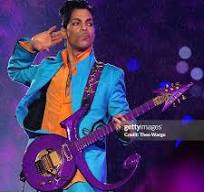
I recently watched a fascinating video about Prince, a true icon whose creative wellspring seemed utterly inexhaustible. The stories shared by the musicians who worked alongside him were nothing short of astounding. Tales of crafting an entire album in a single week, of four-hour soundchecks preceding three-hour electrifying performances, only to be followed by late-night studio sessions. It painted a vivid picture of a man completely consumed by his art.
Witnessing this level of dedication serves as a powerful reminder for any creator. It shatters the illusion that greatness is effortless or stumbled upon by chance. The truth, often hidden behind the polished final product, is one of relentless work, unwavering focus, and an almost obsessive commitment to one's craft. The billionaires and groundbreaking innovators of our time didn't reach those heights through casual dabbling. Their success is rooted in an intense passion and an unyielding drive to bring their visions to life.
For me, this understanding resonates deeply, albeit through a different lens. The past three years have been a profound journey of confronting addiction and rebuilding my life. This process, while essential for my well-being, has unfortunately created a significant distance between myself and the things I hold dear: my music, my family, and my spiritual connection. The need to prioritize recovery has meant navigating life on a drastically reduced income, moving between modest living situations in low-income neighborhoods.
The challenge has been multifaceted: to nurture my creativity and safeguard my mental health while simultaneously striving to improve my economic circumstances. It's a delicate balancing act, demanding immense resilience and a constant recalibration of priorities. There are days when the weight of these converging struggles feels immense, making the act of creation seem like an insurmountable hurdle.
However, in these moments, I often return to the stories of artists like Prince. Not to compare my journey to his stratospheric success, but to glean inspiration from his unwavering dedication. It reinforces the idea that passion, even when temporarily dimmed, can be rekindled through consistent effort and an unshakeable belief in the power of one's creative voice.
And in today's world, the barriers to sharing that voice have never been lower. The advancements in technology mean that the ability to record a song and release it to the world within a matter of days is now within almost everyone's reach. This accessibility is both empowering and a call to action. It underscores the idea that while the path to mastery requires dedication, the initial steps of creation and sharing are more attainable than ever before.
My current journey is one of rebuilding, of piecing together the fragments of my life and rediscovering the creative spark within. The example of those who have achieved greatness through relentless pursuit serves as a guiding light, a reminder that even amidst significant challenges, the passion for creation can endure and ultimately lead the way back to the things that truly matter.