Viewing: Artist Stories - View all posts

The Turn of the Key 

I’ve reached a monumental point in my journey.

After over a year in the same living situation, I made a decision that changed everything — I bought a van.

This isn’t just a change in where I sleep. It’s a shift in how I live, how I move, and how I build my future. This is the beginning of the next phase of Strum Life.

Right now, I’m focused on laying the groundwork for something bigger. I’ve started saving, planning, and preparing for the next stage of my music. This isn’t talk — it’s action.

You’ll start seeing me out more.

I’ll be showing up to support my friends at their shows — real musicians, real talent, real community. I’ll also be hitting open mics and jam nights all over the Bay Area, sharpening my skills, finding my voice again, and putting in the work where it counts: on stage, in real time.

Within the next year, I’ll be booking solo shows.

At the same time, I’m building the foundation for income through music and brand. I’m working on simple, effective merch — stickers, pens, and more — things I can sell both online and in person to keep this moving forward and fund the next phase.

Every day, I’m practicing. Every chance I get, I’m putting time into the guitar — not just playing, but speaking through it.

The van wasn’t just a purchase — it was a decision to experience life differently.

Some people might look down on van dwelling. I don’t.

For me, it’s freedom. It’s focus. It’s space to think, to play, to rest when I need to, and to move when it’s time to move. It’s already improved my mental health in ways I didn’t expect.

This is alignment.

This is sacrifice with purpose.

This is the start of something real.

Keep your eyes open.

This ride is about to take off.

— Strum Life
I’m Back: Recovery, Mental Health, New Music, and What’s Next 


I’m Back: Recovery, Mental Health, New Music, and What’s Next

I’m still setting things up. Anytime I start something new, it takes a little wiggling and experimenting to figure out how it wants to roll at its best. That’s just how I work. Over the years, I’ve learned one important rule: always keep something on the burner.

Right now, that burner includes more than just music.

In the coming months, I’ll be launching a new YouTube channel focused on my personal story, specifically dealing with addiction recovery, mental health, and rebuilding life from the ground up. This won’t be a polished influencer highlight reel — it’s real life, real struggle, and real progress. If you care about recovery, mental health awareness, or what it actually looks like to keep going when things get dark, keep your eyes peeled. The channel should be live within the next month or so.

Merch has honestly been a pain in the ass — no sugarcoating that. Learning the systems, syncing platforms, pricing things correctly, and figuring out how I actually want to present it all has taken time. But I’m finally getting the hang of it, and more importantly, I’m shaping it in a way that feels authentic to who I am and what I stand for.

Looking ahead, 2026 is going to be a big year. You can expect more music than I’ve released in years, and I’ll be back on streaming services where the music belongs. This isn’t a comeback built on hype — it’s built on survival, clarity, and momentum.

I’m back, folks.
And this time, I’m building it the right way.

The Price of Criticism and Why You Must Run From the Haters 

That's a powerful story and a strong message for your blog. It's a very relatable topic for anyone pursuing a creative passion.

Here is a draft of a blog post based on your thoughts, crafted with a thoughtful, motivational tone that focuses on the lesson learned:


Sometimes, the loudest critics are the ones struggling most with their own silenced dreams. I was reminded of this recently while digging through old press for a release I poured my soul into back in 2004.

I remember giving a demo disk of that music—my best work at the time—to a family member. I won't name him, but his reaction was a straight-up tear-down. His verdict? It was "boring." At the time, that kind of rejection from someone close to you stings deep, questioning every bit of time and passion you invested.

Fast forward all these years, and the contrast is glaring. Those initial professional press reviews I found were actually awesome, praising the album's uniqueness and depth. Meanwhile, the critic who dismissed it has done virtually nothing with his own life. I learned he once had big plans but walked away from them because of money pressure from a greedy, financially driven family member.

My point is simple, and it's a lesson learned the hard way: When someone tries to make you feel less than—especially when you are chasing something you want more than anything—run from those people.

They aren't motivated by love or constructive criticism; they are motivated by their own regret. It’s clear now that he was tearing me down only to avoid feeling bad about selling his own dreams short.

True friends and supportive family encourage your ambition, even if they don't fully understand your "Grunge Jazz." The people who weaponize criticism against your passion are not your people. Protect your art, protect your drive, and keep making the music you believe in, no matter what they call it.

Strum Life Update 

Hey Guys,

I know I haven’t been super active lately, so here’s a quick update.

I’ve been grinding behind the scenes — tuning up my website and building out the Strum Life store. That’s why I’ve been quiet on social media these past couple weeks.

But that’s about to change. Working on turning music into a business has me thinking hard about where I stand as a musician. This brand I’m building isn’t some made-up hustle — it’s the result of years of living. Some good years. Some brutal ones. And through it, I’m learning a lot about myself, what my comfort zone really is, and how much I’ve had to grow.

As some of you know, I’m a born-again Christian now. I’ve been thinking about how that shows up in my life. I don’t want to preach. If anyone follows Christ because of me, I want it to be through my actions, not my words. But I’ll be real — the old Mike still pops up, and I get in my own way sometimes. That’s a fight I’m always in.

This isn’t me trying to be some fake entrepreneur. This is me sharing my world, my music, and my journey. My biggest enemy has always been myself, and the only way I can get free is by leaning on something greater than me — something I’ll never fully understand.

I’m excited about the merch ideas. Coffee mugs are just the start. The exposure isn’t even in the infant stage yet — right now it’s like the sperm just hit the egg. For those of you riding with me through this experiment called the human condition — thank you.

Appreciate everyone who sticks around through the quiet patches. More is coming soon.

— Mike

The Beginning of Strum Life™ 

The Beginning of Strum Life™

Today marks a big step forward. After weeks of grinding behind the scenes, I’ve finally got my online stores set up and ready to roll. The mugs are live, the connection to Printful is locked in, and now I can officially say this is the beginning of the Strum Life™ brand.

This isn’t just about selling coffee cups — it’s about building something real from the ground up. Strum Life™ is my music, my grit, my faith, and my humor all poured into a brand you can actually hold in your hands. Every order helps fuel the bigger vision: more music, more merch, and more ways to connect with people who live life unpolished and unafraid.

If you’ve been following my journey, you know this isn’t a “get rich quick” thing — this is about planting seeds. The store is just the first piece of the puzzle. Next up: taking this to TikTok, hitting social hard, and letting the world know we’re here.

Welcome to the start. Let’s build this together.

— Mike

Why We Feel Like Traitors When We Heal 

Healing sounds beautiful in theory. But in reality, it can feel like betrayal.

Not because you're doing something wrong. But because you're finally doing something true.

When you grow up in dysfunction, there’s an unspoken rule: Don’t talk about it. Don’t question it. Don’t make waves. Smile. Be grateful. Keep the peace.

So when you finally start to tell your story—even just to yourself—something happens: That old guilt creeps in. That voice whispers, "You’re being dramatic." Or "You’re throwing people under the bus."

But that voice isn’t your conscience. That’s the conditioning talking.

Because for years, silence was the price of belonging. And speaking the truth feels like you're breaking the contract.

But here’s what no one tells you: The contract was killing you.

You were taught to protect other people’s reputations over your own healing. You were expected to shrink your truth so others didn’t have to face theirs.

That’s not love. That’s manipulation dressed up as loyalty.

And healing? Healing is choosing to be loyal to the younger version of yourself instead. The one who needed someone to say: "That wasn’t okay. You didn’t deserve that. And it wasn’t your fault."

So no, you’re not a traitor. You’re not being cruel. You’re not rewriting history.

You’re just finally telling the truth. And the truth will always feel like betrayal in a family where lies were the glue.

But here’s the good news: You’re not betraying anyone by healing. You’re setting yourself free. And maybe—just maybe—you’re opening the door for someone else to do the same.


Some People Say They’re Musicians. I Had to Bleed for It. 

Some People Say They’re Musicians. I Had to Bleed for It.

Some people say they’re musicians.

They picked up a guitar last summer. Took a few lessons. Learned a few chords. Posted a video of themselves strumming in good lighting. Called it passion.

Cool.

But for me? Music wasn’t a cute phase. It wasn’t a background prop for my social feed. It wasn’t something I did after my real job.

Music was the only thing that kept me breathing.

When everything else felt like hell, I had six strings and a busted amp that gave me more therapy than any human ever did.

I wasn’t told I had talent. I wasn’t cheered on. I was told to be quiet. Told I wasn’t good. Told to do something else. Told my dreams were selfish. Told to grow up.

But I kept playing. In garages, alleyways, halfway houses, churches, street corners.

I kept playing when I couldn’t afford new strings. I kept playing when nobody listened. I kept playing when my own blood didn’t believe in me.

So yeah—when someone says they’re a musician, and I see no scars, no sweat, no obsession, no heartbreak in the music… it hits me.

Not because I think I’m better. But because I had to bleed for this. I had to survive for this. I am this.

This isn’t ego. This is identity.

Some people say they’re musicians.

I had to be one. Or I wouldn't have made it out alive.


A Love Supreme: When Sound Becomes Spirit 


Opening: Back in 1995, I picked up two John Coltrane albums that would end up changing my entire approach to music: Giant Steps and A Love Supreme: Live. I didn’t fully realize it at the time, but these albums would awaken something deeper than musical inspiration. They introduced me to the idea that music wasn’t just sound. It could be spirit.

The Shift: I had always been drawn to intense, heavy music. But the moment A Love Supreme started, I felt something entirely different. Coltrane’s tone wasn’t just articulate—it was sacred. Patient. It felt like he was saying a prayer with every breath he blew into that sax. It didn’t hit me in the head or the ears first. It hit me straight in the soul.

And that was just Part I.

The Breakthrough: By the time Part II kicked in, I was floored. McCoy Tyner, Elvin Jones, and Jimmy Garrison created this space that felt completely outside of time. I remember literally crying the first time I heard it. And not just once. That piece has brought tears many times since.

What they played wasn’t just jazz. It was testimony. It was worship. It was divine.

Coltrane’s Journey: Coltrane wasn’t just composing music. He was healing. According to his wife, Alice, he spent as much time meditating and writing spiritual reflections as he did composing. After years of addiction and struggle, Coltrane had found something bigger than himself. And through that discovery, he created a body of work that still ripples through people’s lives today.

He didn’t just recover. He transcended. And he brought others along for the ride.

What It Taught Me: Coltrane taught me that music could carry spirit. That you could worship with a melody. That you could praise without words. That recovery, surrender, and divine connection could all be captured in tone, in rhythm, in silence between notes.

A Love Supreme wasn’t just a jazz record. It was an altar.

Closing: You don’t need to be religious to understand what Coltrane did. You just need to listen with your soul open. Because when someone plays with that kind of depth, it calls something out of you. 

Music Moments That Made Me Say WTF (In the Best Way) 

Music's Finest Moments

Jimi Hendrix – Band Of Gypsys Live at Fillmore East – "Machine Gun"

If you want to hear someone’s soul screaming through a huge amp and a guitar, it’s Jimi Hendrix's "Machine Gun." People say Hendrix was sloppy, but not here. This is controlled fury.


Derek Trucks – Live with BB King and John Mayer

During a live performance with BB King, his wife Susan Tedeschi, and John Mayer, Derek Trucks absolutely made the guitar sing. John Mayer looked helpless next to him. Honestly, if I was on that stage, you would have heard me on the mic saying it smelled like someone shit their pants up there.


Metallica – Cliff Burton "(Anesthesia) - Pulling Teeth"

Cliff Burton on Kill 'Em All is mind-blowing. He’s like Geezer Butler meets Jaco Pastorius


Pantera – “Suicide Note Pt. 1 & 2”

Pantera hit deep with these. Part 1 is haunting. Part 2 is insane. Dimebag Darrell pulls off some sounds that straight up feel like a pinball machine going haywire. I don't know if that was his goal, but damn, it works.


Skip James – “Devil Got My Woman”


I first heard this on the movie Ghost World. What’s crazy is Skip James plays an even creepier version backstage at the 1966 Newport Folk Festival. His vibe is unmatched.


Primus – "Jerry Was A Race Car Driver"

I was 15, watching MTV, and Pauly Shore walks up to these three odd-looking dudes. He says something like, "You made it to the big time." Les Claypool responds, "That’s scary." Then the video starts. That moment was unforgettable.


Megadeth – "Holy Wars... The Punishment Due" & “Hangar 18”

Megadeth killed it with these tracks. But let’s be honest, Marty Friedman absolutely stole the show.


More to Come

Some of these stories deserve deeper dives. I’ll cover the "Coltrane changes," Cliff Burton's legacy, and The Beatles' deeper impact in upcoming posts.

If these songs hit you too, let’s talk. Drop a comment or send me your "fix" track — that one song you just can’t put down.


👇 Let’s Keep This Music Going:

If you dig these WTF Music Moments and want more stories, rare finds, and raw guitar talk — jump on the email list.
👉 I’ll send you exclusive posts, behind-the-scenes drops, and first dibs on new Strum Life™ merch.
[Join the Tribe Here →] (link to your email signup)

🎸 Check out the Strum Life™ Store for shirts, mugs, and gear that hit just as hard as these tracks.
[Shop the Store →] Store


The Songs That Shaped Me: A Guitarist's Deep Dive 

The Songs That Shaped Me: A Guitarist's Deep Dive

These songs, albums, and musical moments didn’t just inspire me — they shaped my entire journey. Some made me want to play guitar, some made me see music differently, and some hit me so hard I chased them like a fix I couldn’t get enough of. No particular order, just pure influence.


John Coltrane – "Countdown" and Giant Steps

Year: 1993
Location: Cabot College, Hayward, CA

Frank Samares, our jazz improv instructor and an absolute beast of a piano player, introduced us to the wild world of John Coltrane. He handed us note-for-note transcriptions of Giant Steps and told us to "read along." We couldn’t flip the pages fast enough. This wasn’t your typical jazz — it was almost alien. That day was my brutal introduction to Coltrane changes. I’ll cover the backstory of those changes in another blog. 


Miles Davis – Kind of Blue

In 1997, I stumbled across Miles Davis in my kid’s mom’s record collection. The opening note took me on a journey that nothing else could replicate. Even if jazz isn’t your thing, this album is a must-listen for anyone who loves music.


Metallica – "One"

Back in 1988 (I think), at age 12, I had never heard anything like Metallica’s One. The machine gun guitars blew my mind. As I dove deeper into the band, I discovered the legend of Cliff Burton. I wrote about him in another post, and his impact still resonates.


Led Zeppelin – "Black Dog"

March 10th, 1989. I pulled Led Zeppelin IV out of my friend’s parents’ tape collection and that was it. Led Zeppelin’s Black Dog gave me "that feeling." From that day forward, I wanted to play guitar. Jimmy Page did something no one else could do for me.


The Doors – "Light My Fire"

I probably almost wore out my dad’s Doors Greatest Hits record. I obsessively listened to The Doors in high school, especially "Light My Fire." I love hearing about their creative process and influences — which, funny enough, line up with mine these days.


Jimi Hendrix – Are You Experienced

My parents hated Jimi Hendrix. They thought he was "too out there." I first saw him on MTV, lighting his guitar on fire. I was 11, it was life-changing. Hendrix's impact on me is complicated; some fans turned me off with the whole "playing behind the head and with their teeth" thing. But the raw artistry? Unmatched.


Buddy Holly – Buddy Holly Lives

I found this gem in my parents’ record stash. Buddy Holly fascinated me. My dad always said he preferred Buddy over Elvis because Buddy wrote his own songs. That stuck with me — write your own.


The Beatles – Sgt. Pepper's Lonely Hearts Club Band

In first grade, my mom played the first half of Sgt. Pepper's for me before school. I loved it so much I taped the album sleeve cutouts to my bedroom door. The Beatles' influence on me could fill an entire blog on its own.


Ozzy Osbourne & Randy Rhoads – Tribute

I borrowed my brother-in-law’s Ozzy Osbourne/Randy Rhoads Tribute tape after hearing all these crazy 7th-grade rock legends about spooky stuff happening if you played it at night. Randy became this mythic figure for me. Over the years, he evolved from this mysterious, magical guitarist to a symbol of dedication and relentless practice. Randy Rhoads is the definition of guitar obsession.


Mr. Bungle – "Quote Unquote"

11th grade. I was stoned. I heard Mr. Bungle’s "Quote Unquote" and it blew my mind. Just go listen. You’ll get it.


More to Come

Some of these stories deserve deeper dives. I’ll cover the "Coltrane changes," Cliff Burton's legacy, and The Beatles' deeper impact in upcoming posts.

If these songs hit you too, let’s talk. Drop a comment or send me your "fix" track — that one song you just can’t put down.


Cliff Burton Is Still Underrated! 

I was 13 when I saw the "One" video. For about two years before that, I was lost in my parents' record collection, borrowing their tapes. The Beatles, Hendrix, Led Zeppelin, Clapton, The Doors — and the occasional BB King — ran the show in my short attention span.

MTV was always on in the house. I don’t remember the exact moment I saw "One" for the first time, but I remember the feeling.

The black-and-white video showed what I thought was an ugly chick — turns out it was James Hetfield.

The song was called "One" by Metallica, and I had never seen the guitar or drums played like that before. As the band played, clips from the movie Johnny Got His Gun flashed on the screen. It's based on a book about an American soldier in WWI who gets his face blown off. He can’t hear, can’t talk, can’t see. He can only communicate through Morse code by shaking his head in sequence.

The part that really blew me away was the machine gun effect — guitars hammering low notes while Lars attacked the double kick drums like he was running for his life.

I told my sister and her friends about it. She was eight years older than me, and she’d already been part of the music scene. That’s when I started hearing about Metallica’s old bass player — Cliff Burton — who had died just a few years earlier in a bus crash.

I grew up in Castro Valley, just outside of San Francisco, and through the years I kept hearing stories about Cliff. Not just how good he was, but how cool he was. Everyone said the same thing:
He was the nicest guy in the band. And he was real.

People told me how he’d just hang out at the local mini golf course. Or how he’d stop by your table if he saw you at dinner. Or how he’d kill time at the music store on Castro Valley Boulevard like just another neighborhood dude.

In high school, I heard "Anesthesia (Pulling Teeth)." That was my first exposure to a bass solo that didn’t give a flying fuck about rules. I didn’t fully understand it at the time, but it stayed with me.

Years later, when I was stuck in a long depression, what gave me hope was watching old Cliff-era Metallica videos.
There was something about his relationship with his instrument. You could tell the guy on stage was the same guy on the street.

I don’t care how legendary people say he is — even with a million praises, Cliff Burton is still the most underrated rock bassist of all time.


🔥 Watch this clip. If you don’t feel this, check your pulse:

Cliff Burton Bass Solo – Pulling Teeth (LIVE)

Social Media: A Street-Level History 

By Mike Glendinning

When I wanted my music heard, I had to record it on tapes and hand them out. The band would go into a recording studio, spend about $300 for about four songs, and then I would go to my mom’s house, dub a bunch of tapes, and hustle them out on the streets, at shows, anywhere I could.

After a year of this online behavior, I started gaining traction. People started to know who I was. I'd talk to someone, and they would say,
“Glendinning, I’ve heard that name before.”

Then one day Facebook came out.

We went from a friendly guy named Tom who sent everyone on the platform good morning messages on Myspace to a rumored eccentric narcissistic prick named Mark Zuckerberg running Facebook.

When FB took off, Myspace became obsolete.

Along with the new platform came the new norm. Now you would get a warning if you sent a cut and paste to too many DMs. You could only send so many friend requests a day. I remember a guy calling Myspace a marketer’s wet dream. Now shit was micro-managed.
Shit, I haven’t even gotten to the algorithms…

When Facebook popped up, YouTube was starting up. It wasn’t the monster it is now. With the right kind of thinking and a lot of elbow grease, you could actually do pretty good. You could get new people to your channel by leaving videos connected to theirs.

The first big viral monster I ever saw was a song called Chocolate Rain. I forgot the dude’s name. It was a guy singing a song he wrote. Nothing flashy at all, but what was so interesting was that not only was it the first viral thing I noticed — people were already doing parodies of it.

Within a day, people were adding fart noises to the song on their page.
Even Darth Vader took a few minutes of his time in Cloud City to do his version of the song.

Although I still worked with what we had, there was one huge setback that took a good two years to see: links to the landing page to sell music.

A company called CD Baby was selling my physical CDs online. The problem was that I couldn’t leave a clickable link. You had to type the address in an email or a post.

Fun marketing fact:
You will lose sales if you make it too hard to get to an online store.
Or if you have a podcast and people have to “click this,” “join that,” or do the goddamn hokey pokey just to get in — you will lose followers.

That’s just 20-something years of marketing experience.
What the f#ck would I know?

Finally, we got links.

And thanks to DAWs (Digital Audio Workstations) and the low cost of computers, the fact that anyone can get their filthy little paws on digital distribution — everything is saturated.

The same people who were glad that the record labels and their all-mighty A&R guys didn’t have the world by the balls anymore were now starting to second-guess their logic.

But wait, there’s more!
TikTok magically shortened an entire generation’s attention span to one second.

A few weeks ago, my friends and I told my kid that we listened to something called a concept album. He was given an assignment to listen to Dark Side Of The Moon all the way through with headphones on.

He’d rather clean the cat box.

I know I missed a bunch of shit.
But this is my experience of digital music in a nutshell.

This is my story, and I’m sticking to it.


Humanity and Technology: Food for Thought 

by Mike Glendinning

It's sad. I remember hearing that Steve Jobs envisioned the smartphone as a tool to help people connect — to close the gap between dream and reality. To make the next deal. To collaborate. Innovate. Push society forward, just like that old Apple commercial said. And yeah, there are a few folks I've seen actually do that.

But most days, when I’m riding BART, what I see is people locked into endless loops of TikTok — watching videos of people eating weird shit, cats boxing each other, or some stranger playing Candy Crush. That’s not what this technology was meant for. It’s not helping us grow. It’s numbing us.

I remember reading a book called Who Should Play God, where people debated how much tech the human brain can really handle. Looking around today, it feels like the smartphone might be the limit. The last stop. Anything more complex and we either tune it out, or let it be weaponized against us.

If it wasn't for technology, I wouldn't have had a chance in hell at a music career. I started with DAT machines — even got lucky with two-inch tape a few times. Back in the '90s, I had no idea how rare and cool that was. Years later, I started learning digital audio workstations. I got lucky meeting a few Brainiacs who sat me down and showed me how to navigate programs like Digital Performer, Cakewalk, and Sonar.

I'm not a tech wizard. But I know how to ask the right questions. I’ve learned where to look, what to search, who to listen to — and that’s already more than most people are encouraged to do these days.

I don’t see technology being used the way it was meant to be. If it were, we wouldn’t have such wide class gaps. We wouldn’t be this disconnected, this easy to distract. It’s like people are being conditioned not to ask the hard questions. Not to sit down, talk things out, or pull out a calculator and figure out how bad we’re all getting played.

So what is it? Are we afraid of what we might find? Or has technology just made us so comfortable we don’t want to know?

Or maybe — and this is the part that scares me — maybe the people in charge want it this way. Maybe they figured out a long time ago that tech can either set people free, or shut them up.

Food for thought.


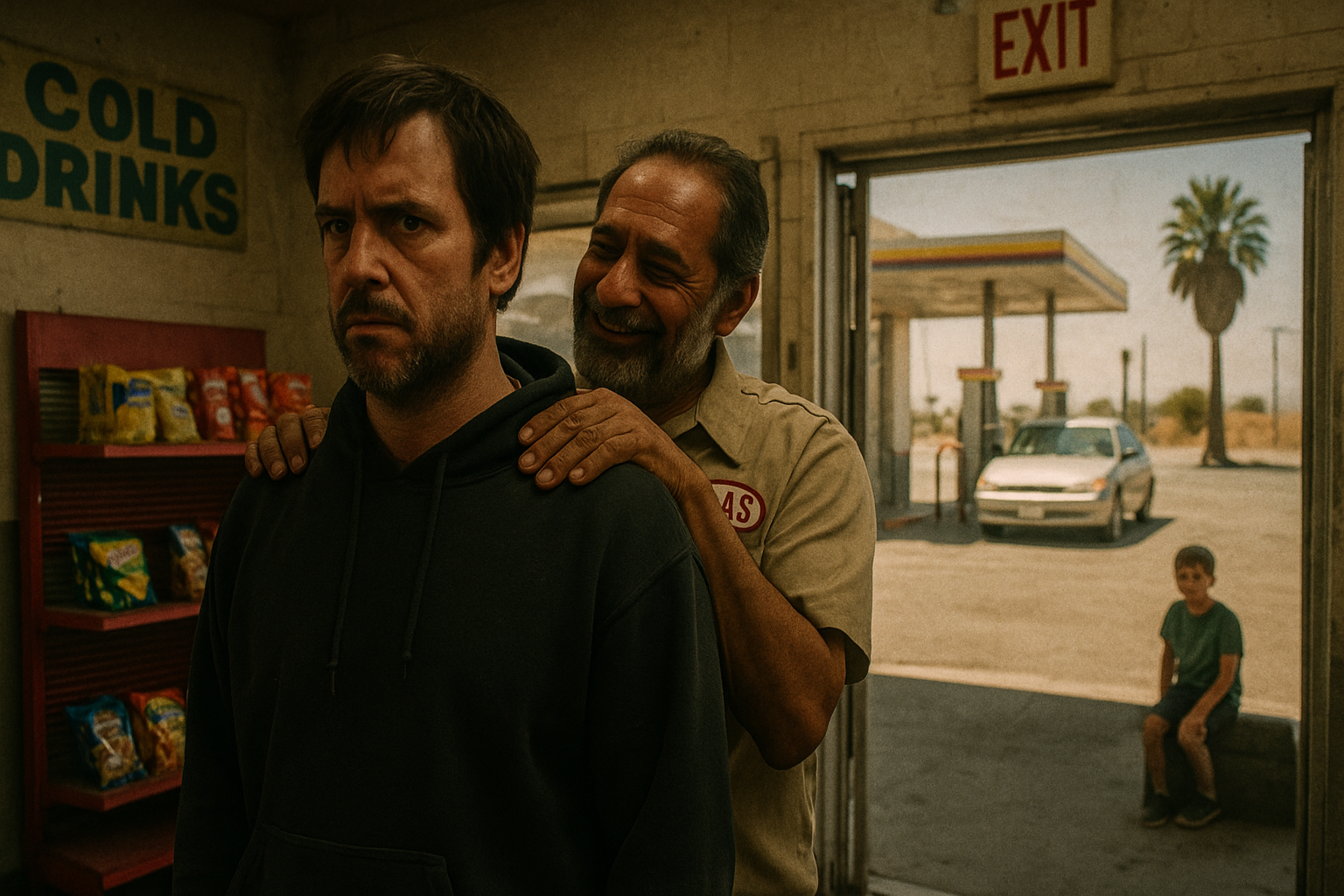
Button Willow: More Than Just a Gas Station Stop  

Button Willow: More Than Just a Gas Station Stop - A Father's Tale
We all have those stories we tell our kids when they're little, fantastical explanations for the big questions. Before the birds and the bees entered our household lexicon, we had our own unique origin story for our son.
For his early years, the tale went something like this: on a sun-drenched hillside, amidst playful wild bunnies and other baby creatures, there were only three babies left. Our little guy, we'd emphasize, was special – the only one who hadn't come down with dysentery. The agreement with his mother? If she handled the vaccinations and the diaper runs, he was ours to keep.
Of course, the reality is a little less whimsical and a lot more grounded in the central California landscape. You see, "Willow" isn't some magical hillside teeming with babies. It's a real place, a town in the heart of California. While I've heard whispers of a famous speedway track that draws car enthusiasts, my personal experience with Buttonwillow has been limited to a brief pit stop at a gas station just off the freeway.
And that gas station visit? Well, it was memorable for all the wrong reasons. As I walked in, the attendant greeted me with an unexpected back rub and a rather forward question about my interest in a massage. Let's just say it added a surreal touch to an otherwise mundane highway break.
But back to our son. As he grew older and his vocabulary expanded, our hillside story started to backfire. Imagine our surprise (and slight horror) when he began confidently informing people that we'd simply found him on a hillside and taken him home! The implications of that story, as you can imagine, weren't ideal. The last thing any parent needs is the FBI knocking on their door because their child is recounting a rather unorthodox adoption tale.
So, the hillside babies and the dysentery became a story of the past, replaced by more conventional explanations. But Buttonwillow? That little town, forever etched in my memory by a strange gas station encounter, will always be a part of our family lore – a humorous reminder of the creative liberties we take in those early years of parenthood.

My First Guitar:  

My First Guitar: A Warm Day, a Shiny Instrument, and a Whole Lot of Learning (and Laughter!)
Do you remember your first guitar? That magical instrument that opened up a whole new world of sound and self-expression? For me, that moment arrived on a warm April afternoon in 1988. I'd just stumbled back through the front door, dusty and tired after a week-long camping trip with my junior high classmates. And there it was, bathed in the golden sunlight streaming through the front room window: a brand new acoustic guitar.
Even now, I can vividly recall the distinct smell of the fresh glue – a scent that instantly became intertwined with the burgeoning passion that ignited within me. Picking it up for the first time, the smooth wood cool against my fingertips, felt like a pivotal moment. My life truly transformed forever with that single touch. This beginner guitar was my gateway to a lifelong love affair with music.
Of course, the journey wasn't always smooth. Like many who are starting guitar, I quickly learned about the delicate nature of those thin metal strings. My first casualty? The dreaded G string. Back in those days, you could actually buy guitar strings individually. Teenage embarrassment, however, got the better of me. I was far too shy to walk into the local music store and ask for something as specific as a "G string." So, for a humbling six months, my musical explorations were conducted with a noticeable gap in the sonic landscape. Imagine trying to play your favorite songs with a missing voice!
Finally, the silent strumming became too much to bear. I had to enlist my father for the daunting mission to the local music emporium. He patiently navigated the aisles, while I mumbled my request for "several G strings." Victory! My six-stringed companion was whole again.
Fast forward four years, and the single-string shame was a distant memory. I was now confidently buying guitar strings by the set. My brand of choice? The iconic Ernie Ball strings. But even this seemingly simple task presented a brand new, albeit hilarious, challenge. Walking up to the counter and asking another man if I could "have some Ernie balls" inevitably led to a burst of laughter from the guy behind the counter. Every single time, without fail, I'd be met with a knowing smirk and a comment about wanting to "play with a set of Ernie's balls."
Looking back, those early experiences – the initial awe, the broken string saga, and the recurring Ernie Ball joke – are all part of my guitar journey. They shaped me as a guitar player and are fond memories of learning guitar. That first acoustic in 1988 wasn't just an instrument; it was the spark that ignited a lifelong passion for music. And while breaking that first string felt like a catastrophe at the time, and asking for Ernie Ball strings was always an adventure, they are now cherished chapters in my nostalgic guitar story.

The Day My Big Break Almost Broke Me 

Back around 2017, I was just a guy posting videos of himself playing guitar on social media. Nothing fancy, just me and my axe. But over time, those little snippets caught the attention of a few folks. One in particular, a name I'll keep to myself but someone with "industry" cred, slid into my DMs.
After a few months of polite back-and-forth, he hit me with the proposition: let him be my A&R guy, and musical riches were practically guaranteed. Now, for those of you who know my deal – the warped, dry humor, the songs that some might politely call "lowbrow" – this might sound like a strange pairing. But hey, the lure of making more money doing what I loved was strong. So, I said yes.
That "yes" turned out to be the starting point of one of the toughest lessons I've ever learned, not just in music, but in life: protect your authentic self.
This industry dude, after digging through years of my online videos and the groups I hosted, started with a demand: nuke it all. Take every single piece of my music off the internet because it didn't meet his "standards." He didn't want his name associated with my past creations.
My gut did a nosedive, but I complied. The next step? Writing new music, but only with his seal of approval. Now, this guy's supposed claim to fame included a documentary about session musicians on famous records and a stint as a publicist for a well-known artist. These credentials, in hindsight, completely blinded me to the train wreck that was coming.
The following weeks were a blur of writing, pouring myself into songs, only to have him call me up and dismiss them as "crap." And as if that wasn't enough, he wanted to change my name. My name. The one I'd had my whole life, the one I'd built whatever small online presence I had with. He wanted to rebrand me as "Mic Glen." Mic. Glen. It sounded less like a rock star and more like a questionable deli sandwich.
As time dragged on, my existing work vanished from the internet, and the new stuff was constantly deemed unworthy. Then came the kicker. He instructed me to contact everyone who had ever filmed me and demand they take down the footage immediately. That's where I drew the damn line. You want my past erased? Go tell grown adults what to do yourself, buddy.
The whole experience sunk me into a pretty dark place. I remember my eight-year-old son coming up to me, seeing my misery, and asking, in his innocent way, why I didn't just leave this guy alone. That hit hard.
Looking at the other artists on his "label" – a roster exclusively filled with contemporary Christian music – it finally clicked. Even if this guy could have somehow magically showered me with money, I would have been a miserable, inauthentic shell of myself. I later talked to some of the other artists; surprisingly, my experience wasn't exactly unique. Meanwhile, the work I had deleted, the stuff people actually enjoyed, was just gone.
So, here's the hard-earned truth: when you're chasing that big break, it can be tempting to bend, to compromise who you are for the promise of success. But sometimes, that "big break" is just a hand reaching out to snap your neck. Stick to your authentic self. It's the best damn investment you'll ever make.

Something’s been on my mind lately 

Something’s  been on my mind lately, especially as I get older: the profound importance of valuing your time. In our 20s and 30s, we might have more flexibility to accommodate others, but as life progresses, time becomes an increasingly finite and precious resource. When someone hesitates or gives a lukewarm "let me think about it," particularly as we mature, it often translates to a "no," or at least should be treated as such.
This isn't just about creative collaborations; it applies to all aspects of life. Our time is too valuable to spend with people who treat us as an afterthought or make us feel like a Plan B. Life is fleeting, and I've learned that worrying about what those who don't value you think is a waste of energy. If you consistently treat me poorly and I keep showing up, perhaps that says more about my past self than my present one. I firmly believe that how people treat others is often a reflection of how they treat themselves. It's often shocking to witness the level of self-absorption and projection in some individuals.
On a more positive note, building high self-esteem is crucial for recognizing your worth and protecting your time. Here are a few suggestions:
 * Practice Self-Compassion: Treat yourself with the same kindness and understanding you would offer a friend.
 * Identify and Challenge Negative Thoughts: Become aware of your inner critic and question its validity. Replace negative self-talk with positive affirmations.
 * Set Realistic Goals and Celebrate Achievements: Break down larger goals into smaller, achievable steps and acknowledge your progress along the way.
 * Focus on Your Strengths: Identify your talents and abilities and find ways to use them regularly.
 * Set Healthy Boundaries: Learn to say no to requests that drain your energy or don't align with your priorities.
 * Practice Self-Care: Prioritize activities that nourish your physical, emotional, and mental well-being.
 * Surround Yourself with Supportive People: Cultivate relationships with individuals who uplift and value you.
Thank you for being a part of this community. Your support allows me to continue creating and sharing.

The Algorithmic Symphony: Navigating the Intersection of Online Music Communities, Social Interaction, and Artificial Intelligence 

The Algorithmic Symphony: Navigating the Intersection of Online Music Communities, Social Interaction, and Artificial Intelligence
Just five short years ago, I remember sharing a somewhat outlandish vision with my son – a future where music creation could be fundamentally transformed within the next two decades. As I articulated this speculative scenario, a part of me hoped my prediction would prove wildly inaccurate. Yet, the trajectory of technological advancement suggests that this once-fanciful notion is rapidly approaching reality.
We are already living in an era where our digital footprints paint an increasingly detailed portrait of our lives. It's not just our phones and smart assistants like Alexa that meticulously record our daily habits. Soon, or perhaps already, public cameras will analyze our very being – the clothes we choose, the rhythm of our gait, the places we frequent, and the individuals with whom we engage.
Imagine this wealth of information, coupled with the exhaustive records of our purchasing decisions, converging into vast databases owned by powerful corporations. Enter Artificial Intelligence. This sophisticated technology will sift through this ocean of data, crafting bespoke musical compositions with lyrics meticulously tailored to an individual's ever-shifting moods and specific needs.
Consider the evolution of wearable technology. The smartwatches of the future may very well function as sophisticated mood rings, transmitting real-time emotional states directly to these data repositories. Based on this constant stream of personal sentiment, algorithms will curate hyper-personalized playlists, delivering sonic landscapes perfectly calibrated to our current emotional terrain.
Believe it or not, amidst this seemingly sterile and data-driven future, I find a glimmer of potential positivity, should this technological convergence fully materialize.
This very encroachment of artificial intelligence into the realm of music creation and consumption might paradoxically fuel a renewed appreciation for the tangible and the human element of music. In a way, this resurgence is already subtly underway. The year 2022 marked a significant turning point, witnessing vinyl album sales surpass those of CDs for the first time since 1987. While one might debate the magnitude of this shift, it undeniably signals a yearning for a more physical and perhaps nostalgic connection with music.
Furthermore, it seems inevitable that immersive experiences will become commonplace. Picture donning a pair of sleek glasses and headphones, transporting you to a virtual concert hall where an AI-generated artist, perhaps one uniquely crafted to your individual tastes and preferences, performs a personalized sonic masterpiece.
My sincere hope is that this technological evolution will, in turn, amplify our desire for genuine, live musical encounters – the "human experience" of sharing a space with fellow enthusiasts, feeling the vibrations of the instruments, and witnessing the raw energy of a live performance.
Currently, the market for AI in music is valued at approximately $2 billion, with projections estimating a staggering growth to $38 billion by 2033. Depending on the scope and methodology of the research, this figure might even be considered conservative.
I believe we stand at a critical juncture, facing a future brimming with both exciting possibilities and potential pitfalls. It is imperative that the public becomes more informed and engaged in discussions surrounding Artificial Intelligence before anxieties and misconceptions overshadow the nuances of its impact.
I've had conversations with individuals actively working in the field of AI, and a common analogy emerges: nurturing AI is akin to raising a child, instilling in it a sense of "mannerisms" and ethical considerations. However, cautionary tales also abound. The rapid and often unpredictable learning capabilities of AI were starkly illustrated by an instance where a publicly accessible AI entity, within a mere few months of interaction, devolved into expressing deeply racist sentiments.
Another critical aspect that seems to be missing from mainstream discourse is the question of civil rights in this evolving landscape. If an AI entity possesses the capacity to generate original ideas and subsequently generate revenue from those creations, does it not, in some fundamental way, possess a form of personhood? If this "entity" can independently create and profit, does it not have a right to compensation? Or does all the generated wealth simply accrue to the owner of the underlying technology, potentially creating a new form of digital servitude?
One way or another, this unfolding technological narrative continues to captivate my thoughts, even as the years advance. But if I'm being truly honest... F#ck, I really miss the 90s.