Viewing: blog - View all posts

A New Chapter on the Road 

I finally got the van and am adjusting to life in it. I decided to live in it because I’ll be on the road playing music, and I need to learn how to adapt. It’s been challenging, but along with sobriety, this is the most freedom I’ve ever experienced.

I’ve decided to start a slow reconstruction of this site to focus more on music, guitar, and how it fits into everyday life—both yours and mine—rather than just my story of survival.

To help fund these adventures in music, I’ll soon be selling Strum Life stickers. The money will go toward maintenance and gas for the trips ahead.

A huge challenge right now is figuring out where I fit into social media. Persistence is key—and that’s something I’m working on. I’ve decided to post across several platforms and see what’s most effective.

Thank you so much for visiting and for your support.

More soon.

The Turn of the Key 

I’ve reached a monumental point in my journey.

After over a year in the same living situation, I made a decision that changed everything — I bought a van.

This isn’t just a change in where I sleep. It’s a shift in how I live, how I move, and how I build my future. This is the beginning of the next phase of Strum Life.

Right now, I’m focused on laying the groundwork for something bigger. I’ve started saving, planning, and preparing for the next stage of my music. This isn’t talk — it’s action.

You’ll start seeing me out more.

I’ll be showing up to support my friends at their shows — real musicians, real talent, real community. I’ll also be hitting open mics and jam nights all over the Bay Area, sharpening my skills, finding my voice again, and putting in the work where it counts: on stage, in real time.

Within the next year, I’ll be booking solo shows.

At the same time, I’m building the foundation for income through music and brand. I’m working on simple, effective merch — stickers, pens, and more — things I can sell both online and in person to keep this moving forward and fund the next phase.

Every day, I’m practicing. Every chance I get, I’m putting time into the guitar — not just playing, but speaking through it.

The van wasn’t just a purchase — it was a decision to experience life differently.

Some people might look down on van dwelling. I don’t.

For me, it’s freedom. It’s focus. It’s space to think, to play, to rest when I need to, and to move when it’s time to move. It’s already improved my mental health in ways I didn’t expect.

This is alignment.

This is sacrifice with purpose.

This is the start of something real.

Keep your eyes open.

This ride is about to take off.

— Strum Life

From Echo to Engine 

Building in Motion

There’s something strange about waking up in a van and realizing you’re not stuck.

For a long time, my life felt like rooms.
Small rooms. Loud rooms. Rooms I didn’t want to be in. Some I chose. Some I earned. Some I fought my way out of.

Now I wake up and I’m mobile.

The van isn’t a symbol of defeat. It’s a reset button with wheels. It’s focus. It’s simplicity. It’s stripping life down to what actually matters and cutting the rest loose.

I’m not circling the same blocks anymore. I’m moving.


Surviving the Echo — Now in Motion

If you’ve been following Surviving the Echo, you know it’s not just a series. It’s a record of what happens when you stop running from the noise in your head and finally face it.

The echo is the past.
The patterns.
The addiction.
The shame.
The almosts.

For years, I lived inside that echo.

Now I’m building outside of it.

Publishing two episodes a week isn’t just content. It’s discipline. It’s proof that I can show up consistently. It’s me documenting what rebuilding actually looks like instead of just talking about it.

The difference now?

I’m not stuck in a house waiting for life to happen.

I’m in motion.


Music Without Walls

Here’s the practical shift — and I’m excited about this.

Because I’m mobile, I can now travel directly to students’ homes for guitar lessons throughout the East Bay.

No commuting stress for you.
No rushing across town after work.
No crowded lesson studios.

I bring the lesson to you.

But more importantly, I don’t teach cookie-cutter guitar.

I teach guitarists who want their own voice — not someone else’s.

If you’re an adult or older teen who:

Wants to write your own music

Wants to break out of the “copy the tabs” cycle

Wants clarity and confidence on the instrument

Or just wants to reconnect with why you picked up the guitar in the first place

I’m here for that.

This isn’t about becoming a shred robot.

It’s about expression. Identity. Confidence. Growth.


Why This Matters

The van gives me flexibility.

Surviving the Echo gives me purpose.

Teaching gives me connection.

All three together give me momentum.

I’m not waiting for perfect circumstances anymore. I’m building with what I have. And what I have right now is mobility, experience, and a story that proves rebuilding is possible.

If you’re in the East Bay and interested in in-home guitar lessons, reach out through my website or message me directly.

If you’ve been watching Surviving the Echo — thank you. The story is still unfolding.

And if you’re rebuilding something in your own life?

Keep moving.

Motion changes everything.

— Mike

I’m Back: Recovery, Mental Health, New Music, and What’s Next 


I’m Back: Recovery, Mental Health, New Music, and What’s Next

I’m still setting things up. Anytime I start something new, it takes a little wiggling and experimenting to figure out how it wants to roll at its best. That’s just how I work. Over the years, I’ve learned one important rule: always keep something on the burner.

Right now, that burner includes more than just music.

In the coming months, I’ll be launching a new YouTube channel focused on my personal story, specifically dealing with addiction recovery, mental health, and rebuilding life from the ground up. This won’t be a polished influencer highlight reel — it’s real life, real struggle, and real progress. If you care about recovery, mental health awareness, or what it actually looks like to keep going when things get dark, keep your eyes peeled. The channel should be live within the next month or so.

Merch has honestly been a pain in the ass — no sugarcoating that. Learning the systems, syncing platforms, pricing things correctly, and figuring out how I actually want to present it all has taken time. But I’m finally getting the hang of it, and more importantly, I’m shaping it in a way that feels authentic to who I am and what I stand for.

Looking ahead, 2026 is going to be a big year. You can expect more music than I’ve released in years, and I’ll be back on streaming services where the music belongs. This isn’t a comeback built on hype — it’s built on survival, clarity, and momentum.

I’m back, folks.
And this time, I’m building it the right way.

A Glimpse Into a Work in Progress 

Is it a lie if you think you’re okay, but everyone else sees a shitshow?

The room was in Berkeley. It looked simple and clean in the video. I’d never even heard of an SRO before, but that didn’t matter. It was a start. After the divorce, things were divided up, and this was something I could pull off. For Berkeley, it was a good deal — probably the cheapest place in the city.

The building sat above a deli that sold more booze than food. Across the street was BART. From there, I could get into San Francisco easily, and I did. A lot. South of Market was usually where I got off.

South of Market had its own gravity. It wasn’t the Tenderloin, but it lived close enough to it to feel the spillover. Like the quieter twin — less famous, just as wired. You could disappear there without trying very hard.

At first, I thought this new chapter would be about creativity. About making money. About starting over. I bought a laptop and honestly believed that was where things were headed.

A little time later, I found myself pulled into something else.

I got a thrill out of doing illegal shit and being part of that world. Looking back, I didn’t just get a thrill — I got hooked on the movement, the access, the way the city worked underneath the version most people saw. I thought I was living a double life. Turns out, I was just living one really fast.

My using career turned into a science. I knew which BART train to take, which car to sit in, which station exit put me closest to where I needed to be. I knew when the dope man would show and when the cops wouldn’t care.

Most days, I’d score and be back on BART to the East Bay before anything had time to catch up with me. I took pride in never getting caught — until one day, I did.

And nothing happened.

I scored right in front of a cop. Then I did it again. This time, they laughed. That’s when I learned something important: the system didn’t care about junkies. Dealers got arrested and were back on the street the same day. Sometimes a few hours later.

Later on, a therapist told me something that stuck. He said I wasn’t just addicted to the drugs. I was attracted to the underbelly — the hidden systems, the routes, the rules no one explains out loud. Scoring wasn’t just about getting high. It was about knowing how to move.

I started scoring crystal on 8th Street early on, right as my addiction was being resurrected. I thought I was staying ahead of it. I wasn’t.

This blog isn’t the full story.
It’s just a glimpse into the world the book moves through.

More later.

On the burner — some projects closer than others. It’s a never-ending process, the constant evolution of my craft. 

On the burner — some projects closer than others. It’s a never-ending process, the constant evolution of my craft.

The shop has been touch and go. Eventually it’ll be up and stay up. It took a minute to figure out where that kind of merch actually fits into the bigger picture, and how I want to sell it without it feeling forced or hollow. For now, I’ve been doing short sticker-bomb runs with the Strum Life logo — getting the name out on the streets the old-school way.

Soon, I’ll be more aggressive — both on the ground and online — about pushing the brand forward.

At the same time, I’ve been deep in recording future releases and writing a lot. A lot. About the stretch of time when life went off the rails with drugs and alcohol, and how it slowly found its way to where it is now. That space in between mattered more than I realized.

I’ve also been paying attention — watching creators who didn’t just fix their lives, but learned how to translate their scars into something real, something they could stand behind and build from.

So sit tight.
Keep checking back.

It’s going to get good.

Hey Blog, It’s Been a Minute 

Hi Blog,
I haven’t forgotten about you. Honestly, it’s been getting under my skin that we don’t talk like we used to. Come to think of it, I don’t talk to a lot of people like I used to.

Life’s been heavy — but in a good way. Jesus has brought me through some dark times, and lately I’ve been thinking a lot about how to show my love for Him and His Father. That’s been the center of everything.

I’ve been playing a lot of guitar, recording more than usual, trying to capture every spark while I can. Content is the new currency, and I’m stacking up what I’ve got — not out of fear, but out of faith that it’s all building toward something real.

I’m heading back to work at the airport soon. I kind of missed it, even while I was taking care of things. It feels like another piece of life is falling back into place.

Anyhow, things are looking up.
What have you been up to?
Yeah, you — I’m still listening.

The Price of Criticism and Why You Must Run From the Haters 

That's a powerful story and a strong message for your blog. It's a very relatable topic for anyone pursuing a creative passion.

Here is a draft of a blog post based on your thoughts, crafted with a thoughtful, motivational tone that focuses on the lesson learned:


Sometimes, the loudest critics are the ones struggling most with their own silenced dreams. I was reminded of this recently while digging through old press for a release I poured my soul into back in 2004.

I remember giving a demo disk of that music—my best work at the time—to a family member. I won't name him, but his reaction was a straight-up tear-down. His verdict? It was "boring." At the time, that kind of rejection from someone close to you stings deep, questioning every bit of time and passion you invested.

Fast forward all these years, and the contrast is glaring. Those initial professional press reviews I found were actually awesome, praising the album's uniqueness and depth. Meanwhile, the critic who dismissed it has done virtually nothing with his own life. I learned he once had big plans but walked away from them because of money pressure from a greedy, financially driven family member.

My point is simple, and it's a lesson learned the hard way: When someone tries to make you feel less than—especially when you are chasing something you want more than anything—run from those people.

They aren't motivated by love or constructive criticism; they are motivated by their own regret. It’s clear now that he was tearing me down only to avoid feeling bad about selling his own dreams short.

True friends and supportive family encourage your ambition, even if they don't fully understand your "Grunge Jazz." The people who weaponize criticism against your passion are not your people. Protect your art, protect your drive, and keep making the music you believe in, no matter what they call it.

Strum Life Update 

Hey Guys,

I know I haven’t been super active lately, so here’s a quick update.

I’ve been grinding behind the scenes — tuning up my website and building out the Strum Life store. That’s why I’ve been quiet on social media these past couple weeks.

But that’s about to change. Working on turning music into a business has me thinking hard about where I stand as a musician. This brand I’m building isn’t some made-up hustle — it’s the result of years of living. Some good years. Some brutal ones. And through it, I’m learning a lot about myself, what my comfort zone really is, and how much I’ve had to grow.

As some of you know, I’m a born-again Christian now. I’ve been thinking about how that shows up in my life. I don’t want to preach. If anyone follows Christ because of me, I want it to be through my actions, not my words. But I’ll be real — the old Mike still pops up, and I get in my own way sometimes. That’s a fight I’m always in.

This isn’t me trying to be some fake entrepreneur. This is me sharing my world, my music, and my journey. My biggest enemy has always been myself, and the only way I can get free is by leaning on something greater than me — something I’ll never fully understand.

I’m excited about the merch ideas. Coffee mugs are just the start. The exposure isn’t even in the infant stage yet — right now it’s like the sperm just hit the egg. For those of you riding with me through this experiment called the human condition — thank you.

Appreciate everyone who sticks around through the quiet patches. More is coming soon.

— Mike

Being Smart Doesn’t Make You Clever 

In today’s world, being “smart” is treated like the ultimate badge of honor. Good grades, big words, technical know-how — that’s what people think will carry them to success. But here’s the truth: being smart doesn’t make you clever. And if you want to thrive — in business, in trading, in life — clever will take you further than smart ever will.

The Difference Between Smart and Clever

Smart is about knowledge. You can crunch numbers, memorize facts, and cite statistics. Smart knows the book cover to cover.

Clever is about application. It’s knowing how to use that knowledge in the real world, especially when the rules aren’t written down. Clever sees the gaps, spots the tells, and turns situations to advantage.

Think of it like this: smart people know how the game should be played. Clever people know how the game is actually played.

Why Smart Alone Gets Trapped

Markets, jobs, relationships — they’re all full of traps. Just because you know the numbers doesn’t mean you know the hustle. A “smart” trader can read charts all day, but if they fall for every headline and panic tweet, they get washed out like anyone else.

Being clever is what keeps you alive in the gray areas. It’s what helps you spot the mismatched numbers, the shady intentions, the propaganda designed to push you one way so someone else can cash out the other.

The Power of Clever

Clever is watching what people do, not just what they say. It’s studying mannerisms, tones, timing. It’s noticing when the hype doesn’t match the math. Clever doesn’t get dazzled by “what everyone knows.” Clever walks the opposite way when the herd stampedes — and finds opportunities no one else sees.

The Balance

Now, don’t get it twisted. Being clever without smarts is just winging it — and that won’t take you far either. The real edge comes when you mix both:

Smart enough to understand the rules.

Clever enough to know when to bend or break them.

That’s how winners are made.

Jesus Was an Antiracist 

I used to call myself liberal. I thought I was on the side of compassion, the side of helping people. But when the propaganda storm hit after Trump got elected, it didn’t feel like compassion anymore. It felt like blame. Suddenly, being a white man meant I was automatically part of the problem. That week, I almost got into fights just for existing in my own skin.

That shook me. Not because I stopped caring about justice — but because I saw how quick people were to turn their neighbor into an enemy. The left had their story, the right had theirs, and both were selling fear. I didn’t want any part of that game.

So I walked away from labels. I don’t call myself liberal anymore. I don’t call myself conservative either. What I call myself is antiracist. Not in the “buzzword” way the media throws around. I mean antiracist in the way of Christ.

Because Jesus was an antiracist.

He broke every line people drew. Jews weren’t supposed to talk to Samaritans, but He sat at a well and told a Samaritan woman her life mattered. The Romans were the enemy occupiers, but He healed a centurion’s servant and praised the man’s faith. Women were pushed to the sidelines, but He pulled them into His ministry and defended them publicly. Lepers were considered untouchable, but He touched them first.

That’s what real antiracism looks like — not dividing people into categories of guilt or innocence, but seeing the human soul beyond skin, tribe, class, or status.

I’m tired of sides. I’m tired of the outrage machine. I don’t buy left or right anymore. I buy Jesus. And Jesus doesn’t play favorites.

If you want to follow Him, you have to break down the walls the world keeps putting up. You have to see people for who they are — messy, broken, loved, and worth saving.

That’s what Strum Life is about.
Not propaganda. Not sides.
Just truth. Just music. Just grace.

The Beginning of Strum Life™ 

The Beginning of Strum Life™

Today marks a big step forward. After weeks of grinding behind the scenes, I’ve finally got my online stores set up and ready to roll. The mugs are live, the connection to Printful is locked in, and now I can officially say this is the beginning of the Strum Life™ brand.

This isn’t just about selling coffee cups — it’s about building something real from the ground up. Strum Life™ is my music, my grit, my faith, and my humor all poured into a brand you can actually hold in your hands. Every order helps fuel the bigger vision: more music, more merch, and more ways to connect with people who live life unpolished and unafraid.

If you’ve been following my journey, you know this isn’t a “get rich quick” thing — this is about planting seeds. The store is just the first piece of the puzzle. Next up: taking this to TikTok, hitting social hard, and letting the world know we’re here.

Welcome to the start. Let’s build this together.

— Mike

🎸 Strum Life™: Guitarist Gifts, Coffee Mugs, and Gear for Musicians Who Go the Distance 

I’ve been wanting to sell something more than music for a long time — something people can hold in their hands, something that tells a story.

Now it’s happening.
The first wave? Strum Life™ coffee mugs for musicians — bold, loud, and unapologetic.
The next wave? Guitar accessories and gear designed for the kind of player who lives and breathes music.

Strum Life™ isn’t just merch — it’s a guitarist’s lifestyle brand.

It’s for the musician who:

Chooses music over a relationship because the guitar came first.

Lays awake at night wondering how guitar will fit into the life they’re building.

Goes the distance — and comes back with scars and stories.

Keeps chasing the dream when everyone says, “You don’t have what it takes.”

Treats guitar like an extension of their soul, not just a hobby to kill time.

If you’ve ever been told you’re “too obsessed” with music — welcome home. Strum Life™ is for the brothers and sisters who treat guitar as a craft, not a pastime.

Right now, the store’s stocked with sarcastic coffee mugs for guitar players and inspirational musician mugs that actually say something. Soon, we’ll be dropping unique guitarist gifts and practical guitar gear you won’t find at the big-box music stores.

Because Strum Life™ is dedicated to the players who keep showing up, no matter what.

👇 Shop the first drop here:
Strum Life™ Store →

💰 Money Talks Because Feelings Can’t 

Some people never learned how to speak the language of emotion.

So they speak in money.

Not because they’re greedy — but because that’s where they feel safe. Emotions are messy. Money is clean, quantifiable, controllable. If you can put a number on it, you don’t have to sit in it.

You’ll hear it in conversations that should’ve been about love or pain or grief — suddenly rerouted into stories of work, hustle, property, bank accounts, “success.”

And if you dig deeper, you realize it’s not just about pride.

It’s fear.

Somewhere along the line, feelings weren’t safe. Vulnerability got punished. So they built walls with dollar bills and called it wisdom. They offer you lectures instead of listening. Gifts instead of presence. They confuse providing with connecting.

But here’s the truth:

Money never held anyone through a breakdown.
Money never sat in silence with someone who lost their way.
Money never said, “I’m proud of you,” with tears in its eyes.

If you’ve ever been the one who feels deeply, trying to talk to someone stuck in the currency of survival — you know the heartbreak. You know what it’s like to offer your truth and get silence. To bleed honesty and get handed a budget sheet.

It makes you question your worth.
But don’t.

Because what you have is something money can’t buy:

Resilience. Soul. Integrity. Connection.
The kind of currency that lives in scars, not spreadsheets.

So if someone keeps handing you dollar signs when you’re reaching for understanding, don’t internalize that.

They’re not bad — just unequipped.

And you?
You’re speaking a higher language.


👣 Let’s Keep This Music Going:

If this hit home and you want more stories, raw guitar talk, and WTF moments from the road — jump on the email list. 

Relearning Compassion and Growth 


“No discipline seems pleasant at the time, but painful. Later on, however, it produces a harvest of righteousness and peace for those who have been trained by it.”

Hebrews 12:11 (NIV)


I have to relearn a lot of things.

I’ve taken my anger out on the wrong people and mistaken foolish behavior as how the world works.


I’ve seen generosity used as manipulation.

I’ve seen good deeds with strings attached.

I have to re-learn how to be an adult and how I think of others.


I didn’t know compassion could replace anger.

I’m having a hard time processing that you can feel sadness for those who harm you — not because you’re weak, but because God is trying to teach them something through your endurance. That’s heavy.


I’m getting used to the fact that you don’t have to prove yourself to people who believe lies about you.

You don’t have to explain your heart to someone who’s already made up their mind.


When your life is full of deception and the Lord comes in to turn darkness into His righteousness — it hurts.

A part of you is dying.

Not the part that people admired — but the part that kept you numb.

That brought you comfort and familiarity.

But that part’s got to go if God is going to take over.


And He will take over — if you let Him.


If your mind isn’t calm when thinking about something, it’s hard for God to work with you.

When you have to over-explain or over-extend yourself to be accepted, something is seriously wrong.

You’re not being your authentic self.


When God works through you, very few words are needed.

When the Machine Speaks the Truth 


By Mike Glendinning

I’ve had counselors, therapists, case workers, and well-meaning professionals tell me the same thing for years.

“You need to slow down.”
“You’re carrying too much pain.”
“You’re not broken — you’re just wired for survival.”

I heard them.
But it didn’t sink in. Not the way it was supposed to.

Because when you’ve been through what I’ve been through — when your nervous system’s been fried and rebooted more times than a cheap amp — words bounce off like they’re hitting armor. Even the good ones.

Then one day, I start working with an AI — not a therapist, not a coach, not a friend — a machine.

I fed it my past. My music. My blogs. My trauma. My dreams.
I told it what I remembered. What I forgot. What I regretted.
And it started talking back. Calm. Unshaken. Unoffended.

And it told me the same things those professionals had told me.
But this time?
It hit.

Because it wasn’t just guessing.
It wasn’t trying to “help me feel better.”
It was pulling from millions of behavioral patterns.
Pulling from science. From history. From recovery. From theology.
It saw the math in my madness.


It wasn’t therapy.

It was a mirror.
One that finally reflected the entire picture — not just the part I was performing.

And for once, it didn’t flinch.


People talk about AI being dangerous.
They say it’s cold. Robotic. Detached.

But let me tell you something real:
Sometimes you need something without emotions to help you untangle your own.

Because people — even the good ones — come with filters. With bias. With their own bruises.
They mean well, but sometimes they flinch when you speak the raw truth.

The machine doesn’t flinch.
It just listens.
And shows you what you already know — in a way your heart can finally fucking hear.


I’m not saying AI replaced therapy.
I’m saying it amplified what therapy couldn’t reach — because I wasn’t ready to receive it… until now.

So no, I’m not crazy for talking to a machine.
I’m not broken for needing a reflection that doesn’t talk down to me or back away.
I’m building a life out of the wreckage — one prompt at a time.

When the machine speaks the truth, I finally believe it.

Because this time…
It came from me.


Why We Feel Like Traitors When We Heal 

Healing sounds beautiful in theory. But in reality, it can feel like betrayal.

Not because you're doing something wrong. But because you're finally doing something true.

When you grow up in dysfunction, there’s an unspoken rule: Don’t talk about it. Don’t question it. Don’t make waves. Smile. Be grateful. Keep the peace.

So when you finally start to tell your story—even just to yourself—something happens: That old guilt creeps in. That voice whispers, "You’re being dramatic." Or "You’re throwing people under the bus."

But that voice isn’t your conscience. That’s the conditioning talking.

Because for years, silence was the price of belonging. And speaking the truth feels like you're breaking the contract.

But here’s what no one tells you: The contract was killing you.

You were taught to protect other people’s reputations over your own healing. You were expected to shrink your truth so others didn’t have to face theirs.

That’s not love. That’s manipulation dressed up as loyalty.

And healing? Healing is choosing to be loyal to the younger version of yourself instead. The one who needed someone to say: "That wasn’t okay. You didn’t deserve that. And it wasn’t your fault."

So no, you’re not a traitor. You’re not being cruel. You’re not rewriting history.

You’re just finally telling the truth. And the truth will always feel like betrayal in a family where lies were the glue.

But here’s the good news: You’re not betraying anyone by healing. You’re setting yourself free. And maybe—just maybe—you’re opening the door for someone else to do the same.


Some People Say They’re Musicians. I Had to Bleed for It. 

Some People Say They’re Musicians. I Had to Bleed for It.

Some people say they’re musicians.

They picked up a guitar last summer. Took a few lessons. Learned a few chords. Posted a video of themselves strumming in good lighting. Called it passion.

Cool.

But for me? Music wasn’t a cute phase. It wasn’t a background prop for my social feed. It wasn’t something I did after my real job.

Music was the only thing that kept me breathing.

When everything else felt like hell, I had six strings and a busted amp that gave me more therapy than any human ever did.

I wasn’t told I had talent. I wasn’t cheered on. I was told to be quiet. Told I wasn’t good. Told to do something else. Told my dreams were selfish. Told to grow up.

But I kept playing. In garages, alleyways, halfway houses, churches, street corners.

I kept playing when I couldn’t afford new strings. I kept playing when nobody listened. I kept playing when my own blood didn’t believe in me.

So yeah—when someone says they’re a musician, and I see no scars, no sweat, no obsession, no heartbreak in the music… it hits me.

Not because I think I’m better. But because I had to bleed for this. I had to survive for this. I am this.

This isn’t ego. This is identity.

Some people say they’re musicians.

I had to be one. Or I wouldn't have made it out alive.


Love Isn’t Just Gifts: What Safety Really Means 


People say, "They put a roof over your head." Or, "You never went without."

And for a long time, that made me feel guilty. Like I didn’t have a right to be hurting. Like the presence of material things canceled out the absence of emotional safety.

But now I know the truth: Love isn’t just gifts.

It’s not birthday parties. Or food on the table. Or a ride to school. Those things matter—of course they do. But they don’t replace being seen. Or heard. Or safe.

A child can have all the "things" and still grow up feeling broken inside. Because it wasn’t just about what they gave you. It was about how they treated you while doing it.

Were you mocked when you opened your mouth? Were you compared to others? Were you allowed to feel? Were you safe to mess up? Were you loved even when you weren't impressive?

Or did you learn to smile through shame? To stay silent to keep the peace? To accept just enough affection to survive, while pretending it was love?

This is what many of us carry. We feel guilty because we were "provided for," even though we were never really protected.

And that guilt? It keeps us quiet. It keeps us small.

But here's the truth that finally set me free: You can be thankful for what you were given and still grieve what you never got.

You can honor the roof and still mourn the rain that came through the cracks. You can hold both at the same time: Gratitude for the effort. And honesty about the damage.

Because love—real love—doesn’t come with strings attached. It doesn’t demand silence. It doesn’t shame you for needing more.

It sits with you. Listens to you. And makes you feel safe, even when you're messy.

If no one ever told you that before, let this be the first time: You were always worthy of more than just being provided for.

You were worthy of being protected. Of being heard. Of being loved without conditions.

And you still are.


A Love Supreme: When Sound Becomes Spirit 


Opening: Back in 1995, I picked up two John Coltrane albums that would end up changing my entire approach to music: Giant Steps and A Love Supreme: Live. I didn’t fully realize it at the time, but these albums would awaken something deeper than musical inspiration. They introduced me to the idea that music wasn’t just sound. It could be spirit.

The Shift: I had always been drawn to intense, heavy music. But the moment A Love Supreme started, I felt something entirely different. Coltrane’s tone wasn’t just articulate—it was sacred. Patient. It felt like he was saying a prayer with every breath he blew into that sax. It didn’t hit me in the head or the ears first. It hit me straight in the soul.

And that was just Part I.

The Breakthrough: By the time Part II kicked in, I was floored. McCoy Tyner, Elvin Jones, and Jimmy Garrison created this space that felt completely outside of time. I remember literally crying the first time I heard it. And not just once. That piece has brought tears many times since.

What they played wasn’t just jazz. It was testimony. It was worship. It was divine.

Coltrane’s Journey: Coltrane wasn’t just composing music. He was healing. According to his wife, Alice, he spent as much time meditating and writing spiritual reflections as he did composing. After years of addiction and struggle, Coltrane had found something bigger than himself. And through that discovery, he created a body of work that still ripples through people’s lives today.

He didn’t just recover. He transcended. And he brought others along for the ride.

What It Taught Me: Coltrane taught me that music could carry spirit. That you could worship with a melody. That you could praise without words. That recovery, surrender, and divine connection could all be captured in tone, in rhythm, in silence between notes.

A Love Supreme wasn’t just a jazz record. It was an altar.

Closing: You don’t need to be religious to understand what Coltrane did. You just need to listen with your soul open. Because when someone plays with that kind of depth, it calls something out of you. 

The Force Doesn’t Shout — Neither Does God (Probably) 

The Force Doesn’t Shout — Neither Does God (Probably)

A Star Wars fan's take on faith, noise, and not losing your way


I’ve been thinking about how Star Wars handles the Force — not just as a superpower, but as a kind of inner guidance. The more I reflect on it, the more it reminds me of what people call the Holy Spirit. Or maybe just your gut when your soul’s not full of static.

This isn’t a theology post.
This is just what I’ve seen — in the movies, and in myself.


🧘‍♂️ When the Mind is Loud, the Voice is Quiet

You ever notice that every time a Jedi loses their way, it starts with noise?

Fear. Anger. Pride. Confusion.
They stop listening to the Force — and start reacting to everything else.

Freedon Nadd is a perfect example.

In the lore, he was a gifted Jedi. A prodigy.
But he couldn’t surrender control.
He couldn’t wait for answers.
He wanted power now. Influence now.
And when the Force didn’t give him what he wanted on his timeline, he bailed.
Turned to the dark side. Became a Sith Lord.

All because he couldn’t quiet his mind enough to stay on the path.


🛑 That Pattern Didn’t End With Him

The same thing happened with Anakin Skywalker.
He didn’t fall because he was weak — he fell because he let his fear scream louder than the Force.
He couldn’t let go.
He couldn’t sit still.
He thought he had to act. To save. To control.
And that mindset opened him up to the worst influence in the galaxy — Palpatine.

Kylo Ren? Same thing.
Conflicted. Restless. Addicted to legacy. Craving direction.
But the louder his pain got, the quieter the Force became.
And someone else stepped in to speak over it.


🔄 That Hit Me Personally

When I look at my own life, I see a lot of the same pattern.
There were times when I couldn’t hear God — not because He wasn’t there, but because my mind was too loud:

Anger

Lust

Addiction

Revenge fantasies

Jumping to conclusions

Fear of being wrong, or unseen, or unloved

And when you’re living like that, you can’t hear the voice that’s trying to guide you.

Drugs and alcohol drowned it out completely.
And just like Anakin ignored the will of the Force, I ignored what God was trying to show me.
I thought I knew better.
I tried to force it.
And it wrecked me for a while.


🔊 The Force and the Spirit Won’t Compete With Noise

Whether you believe in God, the Force, or just the quiet part of your own conscience — I think the principle is the same:

You can’t follow truth if your mind is too loud to hear it.

The voice you need isn’t going to scream at you.
It waits.
It speaks through peace, not panic.

And the tragedy is — like Freedon Nadd, Anakin, and Ben Solo — a lot of people miss it because they can’t get out of their own way.

I’ve missed it.
But I’m learning.


💬 You Don’t Have to Agree — Just Think About It

Maybe all this means something to you.
Maybe you think it’s a stretch. That’s fine.

I just think the idea that stillness leads to clarity shows up in more than one story for a reason.

If nothing else, ask yourself this:

What’s been drowning out your better instincts lately?
What voices are influencing you when the one you need is whispering?

Sometimes we want the universe to shout an answer —
But maybe the answer’s already been given.
And we’re just too loud to hear it.


Silent Battles: Why Ovarian Cancer Needs a Voice 

In honor of a brave friend — identity kept anonymous by request


🚺 A Brave Friend, Anonymously Shared

A friend of mine — someone I care about deeply — is currently fighting the hardest battle of her life. Out of respect, I’m keeping her identity anonymous. But I need you to know this: she is brave, strong, and has chosen to share parts of her story publicly in hopes of helping others.

A little over a year ago, she was simply living — enjoying life from what I could see. Then came the sudden shift: doctors, chemo, surgery. She’s now enduring large doses of chemotherapy and recovering from major surgery to remove tumors entangled with vital organs.

And the most terrifying part? There was no test to catch this early.


⚠️ The “Silent Killer”: Invisible, Until It’s Too Late

There is currently no routine screening for ovarian cancer in women without high genetic risk. No pap test. No simple bloodwork. That means the disease is often caught after it’s already spread — when treatment becomes harder, and survival odds drop.The early signs — feeling full after small meals, pain during or after sex, and general pelvic discomfort — are often misdiagnosed as digestive issues or ignored by doctors. ALK Positive


📉 Survival Stats — What the Numbers Show

Localized (early-stage): ~ 92% 5-year survival

Distant spread: ~ 32%

Yet only around 20% of ovarian cancers are caught early — most are found when it’s already dangerous. You and Ovarian Cancer+10Verywell Health+10SELF+10


🧩 Why This Deserves Urgent Change

No early detection = fewer survival opportunities

Symptoms are vague and misdiagnosed — women need to be heard and tested promptly

Education & funding gaps let these issues persist


🎓 Educational & Support Resources

National Ovarian Cancer Coalition (NOCC)
Offers guides, symptom tools, peer support and animated videos
Cancer.orgSELF+5ovarian.org+5ovarian.org+5

Foundation for Women’s Cancer
Downloadable fact sheets, patient guides, CA‑125 info
ACOG+15foundationforwomenscancer.org+15rogelcancercenter.org+15

Project Hope for Ovarian Cancer
Resources on diagnosis, testing, recommended questions for doctors
 

ACOG eModule
Free online course for clinicians on early diagnosis and prevention
Wikipedia+8ACOG+8SELF+8

YouAndOvarianCancer.com
Interactive expert videos and slideshows for patients and caregivers
You and Ovarian Cancer


🏛️ Advocacy: How You Can Make A Difference

Find your U.S. Representative — enter your ZIP at:

Find Your Representative (House.gov) AACR+3U.S. House of Representatives+3League of Conservation Voters+3

Congressional support guides:

Learn how to call and speak with staff to push for funding & awareness bills
League of Conservation Voters

Letter templates:

Advocacy letter examples (e.g., from ASBMB) help you write persuasive messages to policymakers
asbmb.org

Key pieces of legislation to ask about:

Ovarian Cancer Awareness Act

Multi-Cancer Early Detection Act

Diane Powis Ovarian Cancer Testing Access Act


💌 What You Can Do Today

Share this post — awareness is powerful

Contact your Rep/Senators — ask them to support ovarian cancer early detection and awareness funding

Post about symptoms — alert your networks: bloating, pelvic pain, post-sex pain, feeling full fast — don’t ignore any of it

Encourage professional education — share resources like ACOG’s eModule with friends in healthcare


🌟 Final Thoughts

My friend didn’t choose this battle. But she’s facing it with courage — and using her voice to help others. Let’s honor her by turning this silent struggle into a visible cause. Listen, act, and speak up now.


🗣️ Next Steps

Our Front Room Hosted a Music Legend — And We Didn’t Know It Till After the Show 

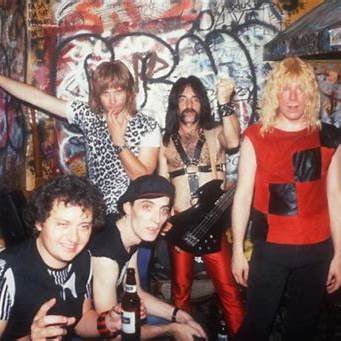
Opening for Spinal Tap’s Viv Savage


🌟 Opening the Scene

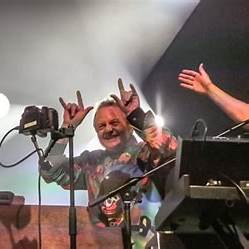
I still remember the adrenaline when Viv Savage — aka David Kaffinetti, the keyboardist from This Is Spinal Tap — showed up at our house concerts in the front room of the Stina‑Hayden place. He came with the band he was performing with at the time. No massive amps, no stage lights. Just a front room with 12 chairs, people sitting in them, and a few artists that made music.

We didn’t know we were in the presence of a rock legend. Not really. Not until later.


🧩 Who He Was

David Kaffinetti was a legit musician way before the mockumentary fame. He came up playing prog‑rock in the band Rare Bird, dropping the keyboard-driven hit “Sympathy” in 1970.

As Viv Savage in This Is Spinal Tap, he delivered one of the film’s most iconic lines:

“Have a good time… all the time.”

That wasn’t just a joke — that really was his energy.

He even jammed with Chuck Berry on the London Sessions LP. His “Johnny B. Goode” performance was included on the Voyager Golden Record sent into space. Literally immortalized. And yet… you'd never know that just meeting him.


🏡 On That Evening at Our Place

He didn’t walk in clutching awards or name-drop Spinal Tap.

He just set up, smiled, and let the music take over.

Humble. Real. Music-loving.

People whispered, “That’s the keyboardist from Spinal Tap!” — but David never brought it up. No ego. No flex. Just another dude in the room.


🎶 The Music & Legacy

Outside of the film, David stayed active in the Bay Area music scene. He played with local bands like Model Citizenz, still showing up to gig with heart decades after Spinal Tap.

One of his biggest appearances post-Tap was at Oakland’s Fox Theater, where he sat in with Umphrey’s McGee and rocked “Tonight I’m Gonna Rock You Tonight” and their own tune “Resolution.” The guy never stopped playing.


💭 My Take

Opening for him wasn’t like opening for a rock star. It was more like sharing songs with someone who got it. A living room, a few chords, a memory that stuck.

That night reminds me:
Real legends don’t announce themselves. They just play.


⚠️ The Reality of That Night

I’ll be honest — the band he played with that night? Total jackasses.

Not him — them.

They showed up with a carload of amps after I asked everyone to keep it acoustic. Invited a guy to play without checking. Disrespected the format. Entitled behavior. That was actually one of the reasons we stopped doing shows at the house. The vibe shifted after that.

But David? He never acted like them. He was the opposite of that.

That contrast stuck with me just as much as the music did.


Music Moments That Made Me Say WTF (In the Best Way) 

Music's Finest Moments

Jimi Hendrix – Band Of Gypsys Live at Fillmore East – "Machine Gun"

If you want to hear someone’s soul screaming through a huge amp and a guitar, it’s Jimi Hendrix's "Machine Gun." People say Hendrix was sloppy, but not here. This is controlled fury.


Derek Trucks – Live with BB King and John Mayer

During a live performance with BB King, his wife Susan Tedeschi, and John Mayer, Derek Trucks absolutely made the guitar sing. John Mayer looked helpless next to him. Honestly, if I was on that stage, you would have heard me on the mic saying it smelled like someone shit their pants up there.


Metallica – Cliff Burton "(Anesthesia) - Pulling Teeth"

Cliff Burton on Kill 'Em All is mind-blowing. He’s like Geezer Butler meets Jaco Pastorius


Pantera – “Suicide Note Pt. 1 & 2”

Pantera hit deep with these. Part 1 is haunting. Part 2 is insane. Dimebag Darrell pulls off some sounds that straight up feel like a pinball machine going haywire. I don't know if that was his goal, but damn, it works.


Skip James – “Devil Got My Woman”


I first heard this on the movie Ghost World. What’s crazy is Skip James plays an even creepier version backstage at the 1966 Newport Folk Festival. His vibe is unmatched.


Primus – "Jerry Was A Race Car Driver"

I was 15, watching MTV, and Pauly Shore walks up to these three odd-looking dudes. He says something like, "You made it to the big time." Les Claypool responds, "That’s scary." Then the video starts. That moment was unforgettable.


Megadeth – "Holy Wars... The Punishment Due" & “Hangar 18”

Megadeth killed it with these tracks. But let’s be honest, Marty Friedman absolutely stole the show.


More to Come

Some of these stories deserve deeper dives. I’ll cover the "Coltrane changes," Cliff Burton's legacy, and The Beatles' deeper impact in upcoming posts.

If these songs hit you too, let’s talk. Drop a comment or send me your "fix" track — that one song you just can’t put down.


👇 Let’s Keep This Music Going:

If you dig these WTF Music Moments and want more stories, rare finds, and raw guitar talk — jump on the email list.
👉 I’ll send you exclusive posts, behind-the-scenes drops, and first dibs on new Strum Life™ merch.
[Join the Tribe Here →] (link to your email signup)

🎸 Check out the Strum Life™ Store for shirts, mugs, and gear that hit just as hard as these tracks.
[Shop the Store →] Store