Viewing: Bay Area Stories - View all posts

A New Chapter on the Road 

I finally got the van and am adjusting to life in it. I decided to live in it because I’ll be on the road playing music, and I need to learn how to adapt. It’s been challenging, but along with sobriety, this is the most freedom I’ve ever experienced.

I’ve decided to start a slow reconstruction of this site to focus more on music, guitar, and how it fits into everyday life—both yours and mine—rather than just my story of survival.

To help fund these adventures in music, I’ll soon be selling Strum Life stickers. The money will go toward maintenance and gas for the trips ahead.

A huge challenge right now is figuring out where I fit into social media. Persistence is key—and that’s something I’m working on. I’ve decided to post across several platforms and see what’s most effective.

Thank you so much for visiting and for your support.

More soon.

Strum Life Update 

Hey Guys,

I know I haven’t been super active lately, so here’s a quick update.

I’ve been grinding behind the scenes — tuning up my website and building out the Strum Life store. That’s why I’ve been quiet on social media these past couple weeks.

But that’s about to change. Working on turning music into a business has me thinking hard about where I stand as a musician. This brand I’m building isn’t some made-up hustle — it’s the result of years of living. Some good years. Some brutal ones. And through it, I’m learning a lot about myself, what my comfort zone really is, and how much I’ve had to grow.

As some of you know, I’m a born-again Christian now. I’ve been thinking about how that shows up in my life. I don’t want to preach. If anyone follows Christ because of me, I want it to be through my actions, not my words. But I’ll be real — the old Mike still pops up, and I get in my own way sometimes. That’s a fight I’m always in.

This isn’t me trying to be some fake entrepreneur. This is me sharing my world, my music, and my journey. My biggest enemy has always been myself, and the only way I can get free is by leaning on something greater than me — something I’ll never fully understand.

I’m excited about the merch ideas. Coffee mugs are just the start. The exposure isn’t even in the infant stage yet — right now it’s like the sperm just hit the egg. For those of you riding with me through this experiment called the human condition — thank you.

Appreciate everyone who sticks around through the quiet patches. More is coming soon.

— Mike

Our Front Room Hosted a Music Legend — And We Didn’t Know It Till After the Show 

Opening for Spinal Tap’s Viv Savage


🌟 Opening the Scene

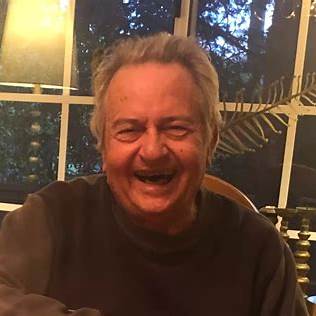
I still remember the adrenaline when Viv Savage — aka David Kaffinetti, the keyboardist from This Is Spinal Tap — showed up at our house concerts in the front room of the Stina‑Hayden place. He came with the band he was performing with at the time. No massive amps, no stage lights. Just a front room with 12 chairs, people sitting in them, and a few artists that made music.

We didn’t know we were in the presence of a rock legend. Not really. Not until later.


🧩 Who He Was

David Kaffinetti was a legit musician way before the mockumentary fame. He came up playing prog‑rock in the band Rare Bird, dropping the keyboard-driven hit “Sympathy” in 1970.

As Viv Savage in This Is Spinal Tap, he delivered one of the film’s most iconic lines:

“Have a good time… all the time.”

That wasn’t just a joke — that really was his energy.

He even jammed with Chuck Berry on the London Sessions LP. His “Johnny B. Goode” performance was included on the Voyager Golden Record sent into space. Literally immortalized. And yet… you'd never know that just meeting him.


🏡 On That Evening at Our Place

He didn’t walk in clutching awards or name-drop Spinal Tap.

He just set up, smiled, and let the music take over.

Humble. Real. Music-loving.

People whispered, “That’s the keyboardist from Spinal Tap!” — but David never brought it up. No ego. No flex. Just another dude in the room.

🎶 The Music & Legacy

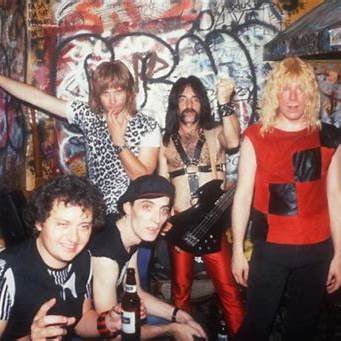
Outside of the film, David stayed active in the Bay Area music scene. He played with local bands like Model Citizenz, still showing up to gig with heart decades after Spinal Tap.

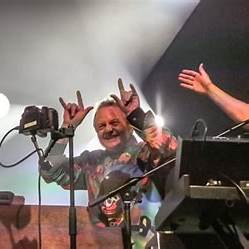
One of his biggest appearances post-Tap was at Oakland’s Fox Theater, where he sat in with Umphrey’s McGee and rocked “Tonight I’m Gonna Rock You Tonight” and their own tune “Resolution.” The guy never stopped playing.

💭 My Take

Opening for him wasn’t like opening for a rock star. It was more like sharing songs with someone who got it. A living room, a few chords, a memory that stuck.

That night reminds me:
Real legends don’t announce themselves. They just play.


⚠️ The Reality of That Night

I’ll be honest — the band he played with that night? Total jackasses.

Not him — them.
They showed up with a carload of amps after I asked everyone to keep it acoustic. Invited a guy to play without checking. Disrespected the format. Entitled behavior. That was actually one of the reasons we stopped doing shows at the house. The vibe shifted after that.

But David? He never acted like them. He was the opposite of that.

That contrast stuck with me just as much as the music did.


Cliff Burton Is Still Underrated! 

I was 13 when I saw the "One" video. For about two years before that, I was lost in my parents' record collection, borrowing their tapes. The Beatles, Hendrix, Led Zeppelin, Clapton, The Doors — and the occasional BB King — ran the show in my short attention span.

MTV was always on in the house. I don’t remember the exact moment I saw "One" for the first time, but I remember the feeling.

The black-and-white video showed what I thought was an ugly chick — turns out it was James Hetfield.

The song was called "One" by Metallica, and I had never seen the guitar or drums played like that before. As the band played, clips from the movie Johnny Got His Gun flashed on the screen. It's based on a book about an American soldier in WWI who gets his face blown off. He can’t hear, can’t talk, can’t see. He can only communicate through Morse code by shaking his head in sequence.

The part that really blew me away was the machine gun effect — guitars hammering low notes while Lars attacked the double kick drums like he was running for his life.

I told my sister and her friends about it. She was eight years older than me, and she’d already been part of the music scene. That’s when I started hearing about Metallica’s old bass player — Cliff Burton — who had died just a few years earlier in a bus crash.

I grew up in Castro Valley, just outside of San Francisco, and through the years I kept hearing stories about Cliff. Not just how good he was, but how cool he was. Everyone said the same thing:
He was the nicest guy in the band. And he was real.

People told me how he’d just hang out at the local mini golf course. Or how he’d stop by your table if he saw you at dinner. Or how he’d kill time at the music store on Castro Valley Boulevard like just another neighborhood dude.

In high school, I heard "Anesthesia (Pulling Teeth)." That was my first exposure to a bass solo that didn’t give a flying fuck about rules. I didn’t fully understand it at the time, but it stayed with me.

Years later, when I was stuck in a long depression, what gave me hope was watching old Cliff-era Metallica videos.
There was something about his relationship with his instrument. You could tell the guy on stage was the same guy on the street.

I don’t care how legendary people say he is — even with a million praises, Cliff Burton is still the most underrated rock bassist of all time.


🔥 Watch this clip. If you don’t feel this, check your pulse:

Cliff Burton Bass Solo – Pulling Teeth (LIVE)

Button Willow: More Than Just a Gas Station Stop  

Button Willow: More Than Just a Gas Station Stop - A Father's Tale
We all have those stories we tell our kids when they're little, fantastical explanations for the big questions. Before the birds and the bees entered our household lexicon, we had our own unique origin story for our son.
For his early years, the tale went something like this: on a sun-drenched hillside, amidst playful wild bunnies and other baby creatures, there were only three babies left. Our little guy, we'd emphasize, was special – the only one who hadn't come down with dysentery. The agreement with his mother? If she handled the vaccinations and the diaper runs, he was ours to keep.
Of course, the reality is a little less whimsical and a lot more grounded in the central California landscape. You see, "Willow" isn't some magical hillside teeming with babies. It's a real place, a town in the heart of California. While I've heard whispers of a famous speedway track that draws car enthusiasts, my personal experience with Buttonwillow has been limited to a brief pit stop at a gas station just off the freeway.
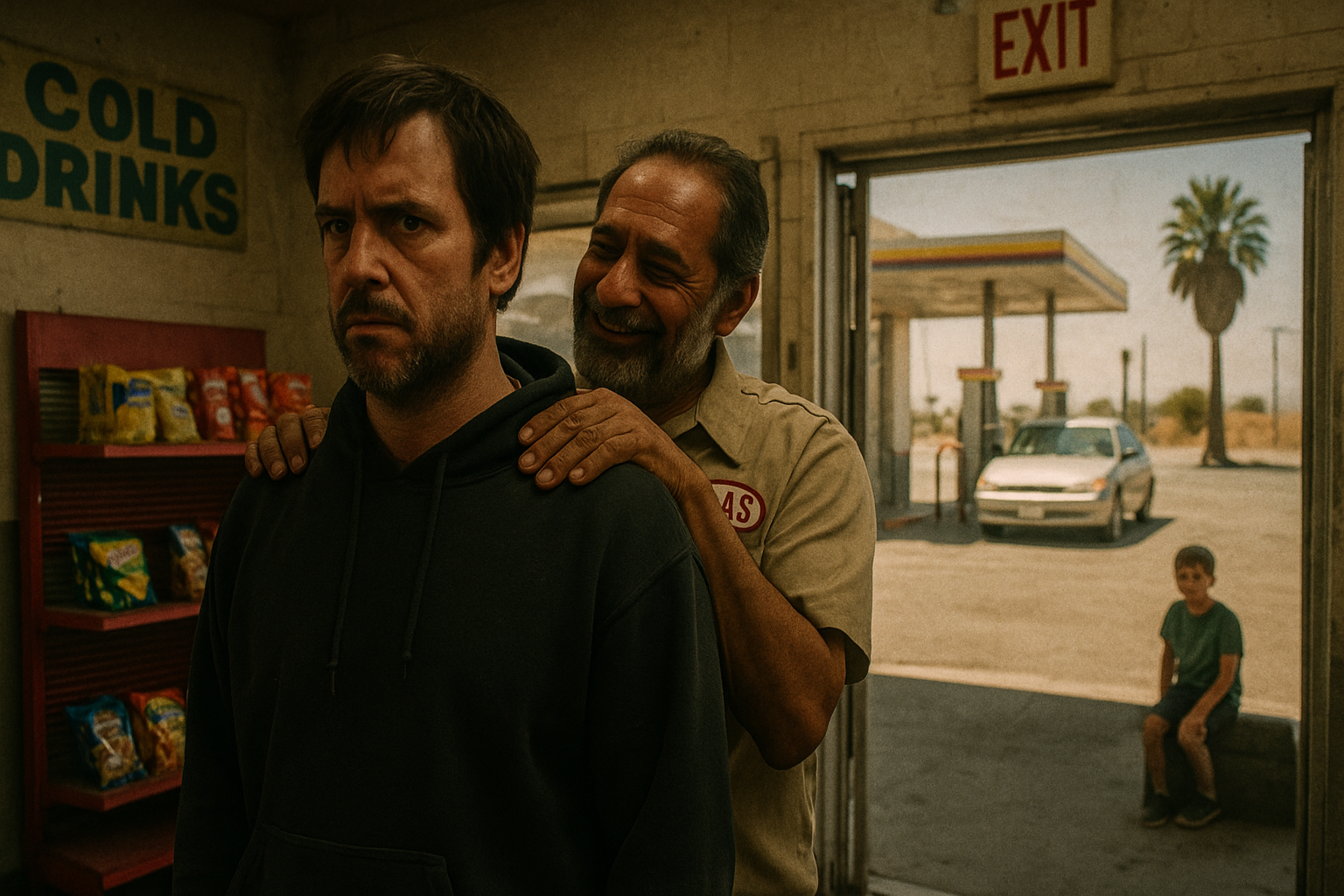
And that gas station visit? Well, it was memorable for all the wrong reasons. As I walked in, the attendant greeted me with an unexpected back rub and a rather forward question about my interest in a massage. Let's just say it added a surreal touch to an otherwise mundane highway break.
But back to our son. As he grew older and his vocabulary expanded, our hillside story started to backfire. Imagine our surprise (and slight horror) when he began confidently informing people that we'd simply found him on a hillside and taken him home! The implications of that story, as you can imagine, weren't ideal. The last thing any parent needs is the FBI knocking on their door because their child is recounting a rather unorthodox adoption tale.
So, the hillside babies and the dysentery became a story of the past, replaced by more conventional explanations. But Buttonwillow? That little town, forever etched in my memory by a strange gas station encounter, will always be a part of our family lore – a humorous reminder of the creative liberties we take in those early years of parenthood.

My First Guitar:  

My First Guitar: A Warm Day, a Shiny Instrument, and a Whole Lot of Learning (and Laughter!)
Do you remember your first guitar? That magical instrument that opened up a whole new world of sound and self-expression? For me, that moment arrived on a warm April afternoon in 1988. I'd just stumbled back through the front door, dusty and tired after a week-long camping trip with my junior high classmates. And there it was, bathed in the golden sunlight streaming through the front room window: a brand new acoustic guitar.
Even now, I can vividly recall the distinct smell of the fresh glue – a scent that instantly became intertwined with the burgeoning passion that ignited within me. Picking it up for the first time, the smooth wood cool against my fingertips, felt like a pivotal moment. My life truly transformed forever with that single touch. This beginner guitar was my gateway to a lifelong love affair with music.
Of course, the journey wasn't always smooth. Like many who are starting guitar, I quickly learned about the delicate nature of those thin metal strings. My first casualty? The dreaded G string. Back in those days, you could actually buy guitar strings individually. Teenage embarrassment, however, got the better of me. I was far too shy to walk into the local music store and ask for something as specific as a "G string." So, for a humbling six months, my musical explorations were conducted with a noticeable gap in the sonic landscape. Imagine trying to play your favorite songs with a missing voice!
Finally, the silent strumming became too much to bear. I had to enlist my father for the daunting mission to the local music emporium. He patiently navigated the aisles, while I mumbled my request for "several G strings." Victory! My six-stringed companion was whole again.
Fast forward four years, and the single-string shame was a distant memory. I was now confidently buying guitar strings by the set. My brand of choice? The iconic Ernie Ball strings. But even this seemingly simple task presented a brand new, albeit hilarious, challenge. Walking up to the counter and asking another man if I could "have some Ernie balls" inevitably led to a burst of laughter from the guy behind the counter. Every single time, without fail, I'd be met with a knowing smirk and a comment about wanting to "play with a set of Ernie's balls."
Looking back, those early experiences – the initial awe, the broken string saga, and the recurring Ernie Ball joke – are all part of my guitar journey. They shaped me as a guitar player and are fond memories of learning guitar. That first acoustic in 1988 wasn't just an instrument; it was the spark that ignited a lifelong passion for music. And while breaking that first string felt like a catastrophe at the time, and asking for Ernie Ball strings was always an adventure, they are now cherished chapters in my nostalgic guitar story.

Fourth of July in Oakland 

Fourth of July in Oakland: When Fireworks and Reality Blur
Let me tell you something: the Fourth of July in Oakland, California? It’s not your average neighborhood barbecue and sparkler affair. It's… something else entirely.
I got a taste of the prelude to the madness on July 5th, 2023, at the ungodly hour of 5:30 AM. There I was, waiting for the party bus to the Oakland Airport for my 7 AM shift. Even at that early hour, Broadway was already playing host to the usual cast of characters – folks panhandling, others in their own world having conversations with thin air.
Then, out of nowhere, a fleet of police SUVs came tearing down northbound Broadway. Now, seeing that many police vehicles speeding anywhere in Oakland at that time is unusual, but this felt different. They screeched to a halt about five blocks down. A moment later, the unmistakable sound of rapid-fire explosions filled the air: boom boom boom boom.
My brain immediately jumped to the worst-case scenario: a shootout. Instinctively, I dove for cover in a nearby storefront doorway. Peeking out, I saw someone casually sitting at the bus stop. “Hey! Get over here!” I yelled, urging them to take cover before they got caught in the crossfire. They didn’t even flinch. Ignored me completely.
As the noise subsided, I cautiously looked towards the source of the commotion. Turns out, it wasn’t gunfire at all. Just some joker lighting off a whole pack of firecrackers. A jarring wake-up call, to say the least.
Fast forward to the evening of July 4th, 2024. I was visiting my son in Albany, maybe six miles or so from my place in downtown Oakland. As the sun began to dip, a sense of urgency washed over me. I needed to get back to my apartment before nightfall. I just knew things were about to get wild.
Hopping on the bus, I was greeted by a bus driver who looked like he’d seen a ghost. Great, whatever was coming was already setting in.
Even though it was still light out when I got off the bus, the “festivities,” as some might call them, had already begun. The distinct crackle of gunfire started echoing between the city buildings. Then came the heavy artillery – the bright flashes and chest-thumping booms of M1000s being lit off with increasing frequency. By 8 PM, it sounded like a full-blown war zone had erupted.
The sheer volume of explosions was disorienting. It became impossible to distinguish between the powerful fireworks and actual gunfire. I finally managed to fall asleep around 10 PM, the relentless explosions still shaking the air. I woke up at 2 AM for a bathroom break, and unbelievably, the explosions were still going strong. Just as I was drifting back to sleep, a blessed silence descended. The stereo sound of chaos had finally stopped.
And then, just as sleep was about to claim me, it all started again.
The Fourth of July and New Year’s Eve in Oakland and nearby Richmond are legendary for this kind of… unrestrained celebration. There’s even a persistent rumor that you won’t see a single police officer patrolling the streets during this time. I’ve heard whispers from “inside sources” that they all huddle under overpasses, trying to avoid stray bullets flying through the air. Think about that for a second: the cops are hiding. Maybe the rest of us should be too.
It’s a unique kind of Independence Day in Oakland, where the lines between celebratory explosions and something far more dangerous become terrifyingly blurred. You just hunker down and hope the night passes without any stray fire – of any kind – finding its way to you.
 

The Algorithmic Symphony: Navigating the Intersection of Online Music Communities, Social Interaction, and Artificial Intelligence 

The Algorithmic Symphony: Navigating the Intersection of Online Music Communities, Social Interaction, and Artificial Intelligence
Just five short years ago, I remember sharing a somewhat outlandish vision with my son – a future where music creation could be fundamentally transformed within the next two decades. As I articulated this speculative scenario, a part of me hoped my prediction would prove wildly inaccurate. Yet, the trajectory of technological advancement suggests that this once-fanciful notion is rapidly approaching reality.
We are already living in an era where our digital footprints paint an increasingly detailed portrait of our lives. It's not just our phones and smart assistants like Alexa that meticulously record our daily habits. Soon, or perhaps already, public cameras will analyze our very being – the clothes we choose, the rhythm of our gait, the places we frequent, and the individuals with whom we engage.
Imagine this wealth of information, coupled with the exhaustive records of our purchasing decisions, converging into vast databases owned by powerful corporations. Enter Artificial Intelligence. This sophisticated technology will sift through this ocean of data, crafting bespoke musical compositions with lyrics meticulously tailored to an individual's ever-shifting moods and specific needs.
Consider the evolution of wearable technology. The smartwatches of the future may very well function as sophisticated mood rings, transmitting real-time emotional states directly to these data repositories. Based on this constant stream of personal sentiment, algorithms will curate hyper-personalized playlists, delivering sonic landscapes perfectly calibrated to our current emotional terrain.
Believe it or not, amidst this seemingly sterile and data-driven future, I find a glimmer of potential positivity, should this technological convergence fully materialize.
This very encroachment of artificial intelligence into the realm of music creation and consumption might paradoxically fuel a renewed appreciation for the tangible and the human element of music. In a way, this resurgence is already subtly underway. The year 2022 marked a significant turning point, witnessing vinyl album sales surpass those of CDs for the first time since 1987. While one might debate the magnitude of this shift, it undeniably signals a yearning for a more physical and perhaps nostalgic connection with music.
Furthermore, it seems inevitable that immersive experiences will become commonplace. Picture donning a pair of sleek glasses and headphones, transporting you to a virtual concert hall where an AI-generated artist, perhaps one uniquely crafted to your individual tastes and preferences, performs a personalized sonic masterpiece.
My sincere hope is that this technological evolution will, in turn, amplify our desire for genuine, live musical encounters – the "human experience" of sharing a space with fellow enthusiasts, feeling the vibrations of the instruments, and witnessing the raw energy of a live performance.
Currently, the market for AI in music is valued at approximately $2 billion, with projections estimating a staggering growth to $38 billion by 2033. Depending on the scope and methodology of the research, this figure might even be considered conservative.
I believe we stand at a critical juncture, facing a future brimming with both exciting possibilities and potential pitfalls. It is imperative that the public becomes more informed and engaged in discussions surrounding Artificial Intelligence before anxieties and misconceptions overshadow the nuances of its impact.
I've had conversations with individuals actively working in the field of AI, and a common analogy emerges: nurturing AI is akin to raising a child, instilling in it a sense of "mannerisms" and ethical considerations. However, cautionary tales also abound. The rapid and often unpredictable learning capabilities of AI were starkly illustrated by an instance where a publicly accessible AI entity, within a mere few months of interaction, devolved into expressing deeply racist sentiments.
Another critical aspect that seems to be missing from mainstream discourse is the question of civil rights in this evolving landscape. If an AI entity possesses the capacity to generate original ideas and subsequently generate revenue from those creations, does it not, in some fundamental way, possess a form of personhood? If this "entity" can independently create and profit, does it not have a right to compensation? Or does all the generated wealth simply accrue to the owner of the underlying technology, potentially creating a new form of digital servitude?
One way or another, this unfolding technological narrative continues to captivate my thoughts, even as the years advance. But if I'm being truly honest... F#ck, I really miss the 90s.